
Follow us on Google News

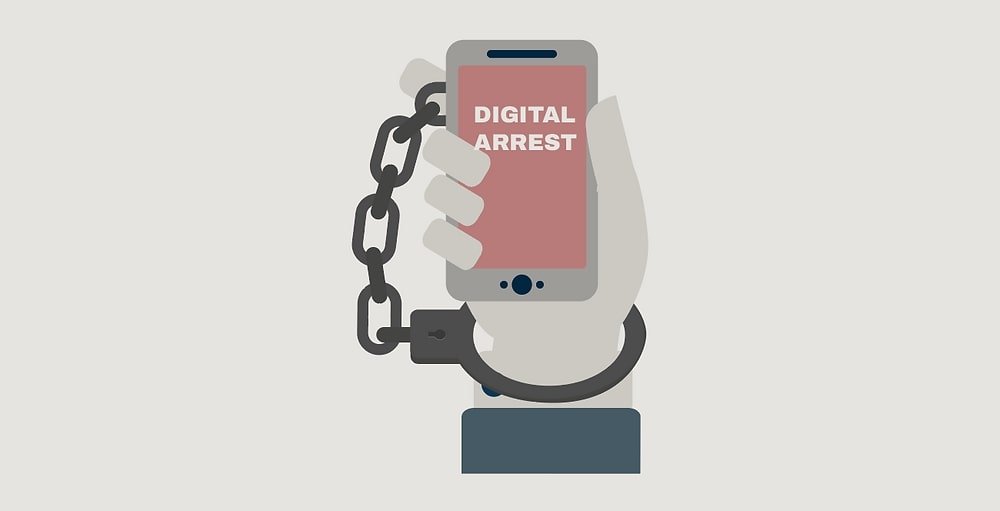
Digital arrest scams represent a sophisticated evolution in cyber fraud, where criminals pose as high-ranking officials from agencies like the CBI, ED, Income Tax Department, or even RBI to psychologically trap victims in a fabricated “virtual custody.” These scams exploded across India from mid-2023 onward, defrauding thousands of crores through fear tactics that mimic legitimate investigations, often lasting 12-48 hours of relentless pressure.
Certified Cyber Crime Investigator Course Launched by Centre for Police Technology
The Complete Attack Lifecycle
Scammers follow a structured playbook, mirroring ransomware kill chains but weaponized with social engineering:
- Initial Contact (Hook Phase): Victims receive automated or spoofed calls from numbers mimicking official helplines (e.g., 1930 or agency lines). Accusations vary—your Aadhaar linked to money laundering, a parcel with drugs/contraband in your name, or tax evasion—but always urgent and personal, using scraped data from breaches.
- Escalation to Video (Immersion Phase): They switch to WhatsApp video, displaying fake IDs, uniforms, police station backdrops, or deepfake faces of real officers. Forged FIRs, arrest warrants, or “court orders” appear on screen, often with your photo or details pulled from public records.
- Isolation and Control (Custody Phase): Victims must keep cameras on 24/7, stay alone in a room, and surrender phone screens via remote access tools. Threats escalate: account freezes incoming, family members next, passport revocation, or public shaming via “leaked” videos.
- Extortion Climax (Extraction Phase): Demands start as “verification fees” (₹5-50 lakhs), then balloon to “settlements” via UPI, mule accounts, gift cards, or crypto. Funds flow through layered hawala networks or shell firms before vanishing.
- Exfiltration and Ghosting: Post-payment, scammers delete traces, block contacts, and move to new targets, leaving victims too ashamed to report initially.
Anatomy of Deception Tactics
These fraudsters excel at blending tech with human psychology—here’s what makes them deadly:
- Tech Enablers: Caller ID spoofing (Truecaller bypass), AI voice cloning of family voices for added terror, screen-sharing malware disguised as “investigation software,” and QR codes linking to phishing sites.
- Psychological Weapons: Urgency overload (“arrest team dispatched”), authority projection (bogus badges with holograms), and Stockholm-like bonding where scammers pose as “sympathetic investigators” offering escape routes for payment.
- Victim Profiling: Targets include NRIs, seniors, professionals aged 40-60 with high savings; data sourced from dark web leaks of banks, telcos, or matrimonial sites.
- Scale and Networks: Run by West African syndicates (Ghana/Nigeria hubs) or Indian modules in UP/Bihar, with 10,000+ daily attempts via VoIP farms. Losses hit ₹2,000+ crores in 2025 alone per I4C data.
Real-World Case Studies
- Kanpur Horror (2024): Retiree coerced for 36 hours, lost ₹67 lakhs after “ED” showed fake warrant linking his PAN to hawala. Funds traced to Dubai mules.
- Mumbai NRI Trap (2025): US-based doctor paid ₹1.2 crores via crypto after “CBI” claimed his Aadhaar funded terror; family alerted via social media red flags.
- Mass Outbreaks: 2025 spikes tied to election seasons, with 15,000 complaints monthly to 1930 helpline.
Ironclad Prevention Blueprint
Break the chain at every stage with these layered defenses:
- Immediate Red Flags: No agency demands payments/OTPs over phone or video; physical presence required for arrests under CrPC Section 41-60.
- Verification Protocol: Hang up, call back official numbers (cybercrime.gov.in, 1930). Use a second device for independent checks—never scammer-provided links.
- Tech Shields: Block unknown internationals via Truecaller Premium, enable UPI transaction limits (₹1 lakh/day), use hardware security keys for banking, avoid screen shares.
- Family Drills: Weekly awareness shares—role-play scenarios, designate “safe contact” for verification. Seniors get simplified helpline cards.
- Post-Exposure Recovery: Freeze accounts via bank apps, file Zero FIR at local station + cybercrime.gov.in within 24 hours, track via I4C dashboard.
FAQs: Victim’s Survival Guide
Q: They have my exact PAN/Aadhaar—must be real?
A: Public data leaks fuel this; verify independently via incometax.gov.in or UIDAI portals, not scammer screens.
Q: What if accounts get frozen mid-call?
A: Bluff tactic—real freezes notify via SMS/post. Check netbanking; contact bank directly.
Q: Can I negotiate or pay partially?
A: Never—fuels greed, no guarantees. Report first, recover via EOW tracing (60% success in tagged cases).
Q: Video shows live police station—fake?
A: Stock footage or rented sets in scam hubs like Jamtara; demand station name/address for callback.
Q: NRIs safe abroad?
A: No—WhatsApp global; use VPNs, link family as secondary alerts.
Myths Demolished
Myth: Digital arrest legal under new cyber laws.
Fact: No provision in IT Act 2000, BNS 2023, or DPDP Act—pure vigilantism; courts mandate due process.
Myth: Quick payment ends nightmare.
Fact: 90% demand more; isolation prevents family intervention—loudly alert neighbors if trapped.
Myth: Only greedy targets hit.
Fact: Trust/respect for authority exploited; even ethical citizens panic under sustained terror.
Myth: Police too busy for small cases.
Fact: I4C coordinates nationwide; ₹10 lakhs+ recoveries weekly via blockchain tracing.
Stay vigilant—knowledge disarms scammers faster than any firewall.
About the author – Ayesha Aayat is a law student and contributor covering cybercrime, online frauds, and digital safety concerns. Her writing aims to raise awareness about evolving cyber threats and legal responses.