
Follow us on Google News

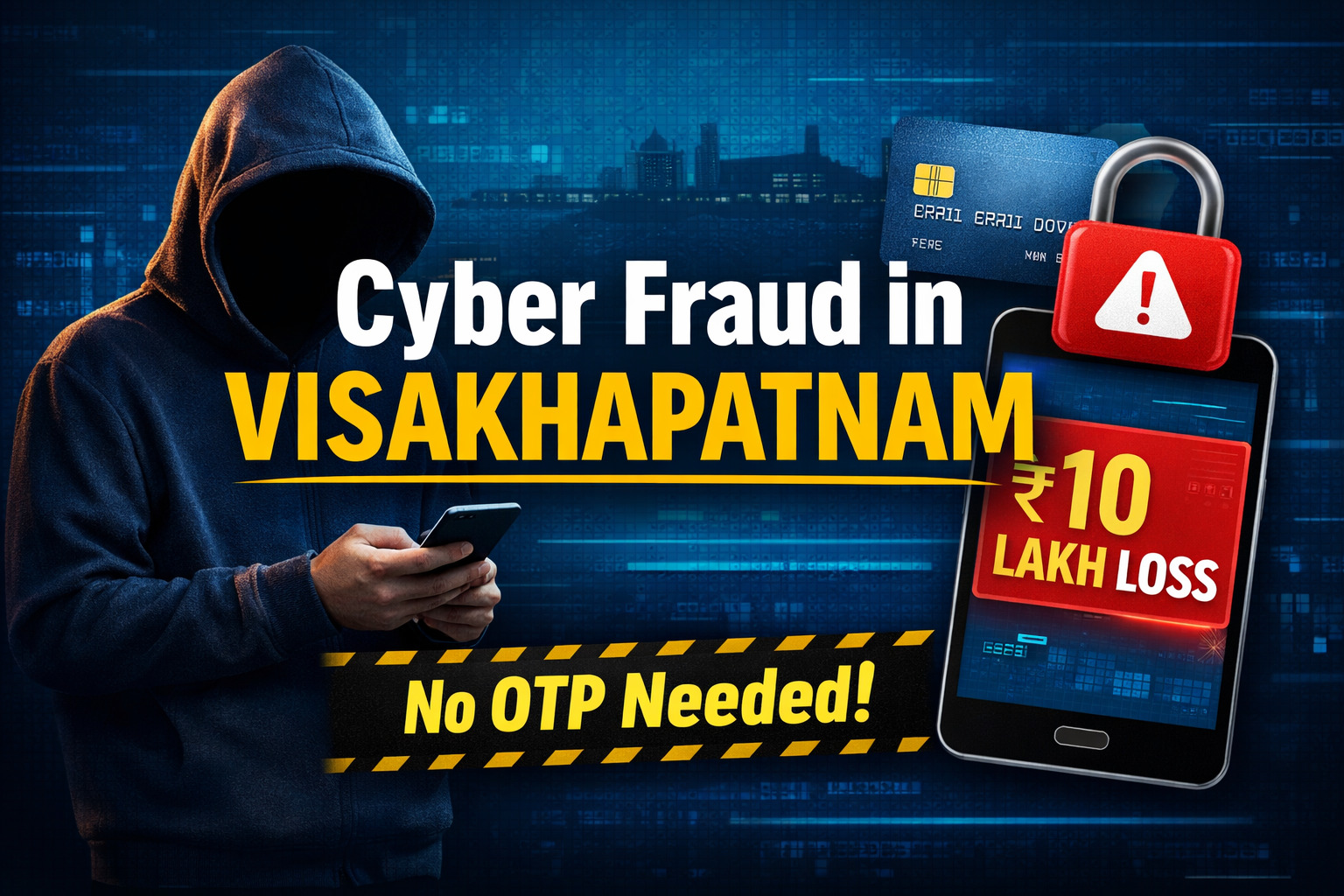
Cyber fraud in Andhra Pradesh has taken a more dangerous and sophisticated turn, with fraudsters exploiting new techniques that bypass conventional safeguards. Over the past few weeks, more than 20 cases have been reported in Visakhapatnam, where cardholders lost substantial sums of money despite neither sharing one-time passwords (OTPs) nor responding to suspicious calls or links. The incidents have triggered serious concerns over the robustness of digital payment systems and the level of consumer awareness.
Certified Cyber Crime Investigator Course Launched by Centre for Police Technology
Victims Unaware of Unauthorized Transactions
According to complaints related to cybercrime, several victims said they did not receive real-time transaction alerts or prompts seeking confirmation. In one recent case, a 40-year-old defence employee discovered that ₹75,000 had been spent from his credit card. The victim told authorities that while OTP messages were generated, he did not share them with anyone and had not authorised any purchases.
In another case, a city resident identified as KS Kumar (name changed) said he received his first credit card in 2025 and used it sparingly. A few months later, he was shocked to receive a bill exceeding ₹1 lakh. “I neither made any online purchases nor shared my card details or OTP with anyone,” Kumar said in his complaint.
Patterns Across Multiple Cases
Similar patterns have emerged across multiple cases. One victim reported losing over ₹1.5 lakh after sharing only his name and mobile number with what he believed was an online delivery service. In another instance, nearly ₹2 lakh was siphoned off from a credit card, with the fraud coming to light only when the monthly statement was generated.
Police data indicate that the cumulative loss in these 20-plus cases in Visakhapatnam has crossed ₹10 lakh. Investigators note a common thread across complaints: almost all victims insist they neither shared OTPs nor knowingly approved any transactions, suggesting that fraudsters have moved beyond traditional scam methods.
Rise of APK-Based and Silent Fraud
Cybercrime experts and research bodies have flagged this trend as part of a broader national pattern. According to the Future Crime Research Foundation, there has been a sharp rise in APK-based fraud and so-called “silent transactions” in recent months. Once a user unknowingly installs a malicious app, fraudsters can gain parallel access to OTPs, messages and other sensitive data on the device, enabling unauthorised transactions without immediate detection.
Cybersecurity specialists also point to structural vulnerabilities. The lack of two-factor authentication on some platforms, the growing adoption of contactless cards and the circulation of fake UPI links have expanded the attack surface for criminals. Phishing messages designed to look like official bank communications, along with fake reward point redemptions and cashback offers, are increasingly being used to deceive users.
Festive Season Fraud Warnings
With the Sankranti festival approaching, authorities have warned that cybercriminal activity could intensify. Fraudsters typically exploit festive shopping and higher digital transaction volumes by promoting “lifetime free” credit cards, credit limit enhancements and reward redemptions through fraudulent links. Once such a link is clicked or a suspicious app is installed, personal and banking data can be compromised within minutes.
Expert Advice for Vigilance
Administrators and cyber experts have urged the public to remain vigilant. Citizens are advised not to open APK files or links received from unknown numbers, to avoid sharing any bank or card-related information, and to be cautious of unsolicited messages promising rewards or upgrades. Experts warn that even a single careless click can expose sensitive financial data.
Those receiving suspicious calls or messages are advised to disconnect immediately and verify any claims directly with their bank through official channels. In cases of suspected cyber fraud, victims should promptly report the incident by calling the national cybercrime helpline number 1930.
As digital payments continue to expand, experts stress that awareness remains the strongest line of defence. The recent spate of cases in Visakhapatnam underscores how cyber fraudsters are exploiting even minor lapses in digital hygiene—often leaving victims unaware until the financial damage has already been done.
About the author – Ayesha Aayat is a law student and contributor covering cybercrime, online frauds, and digital safety concerns. Her writing aims to raise awareness about evolving cyber threats and legal responses.