
Follow us on Google News

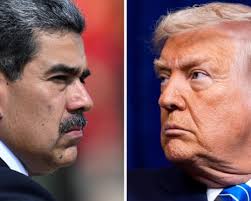
The capture of Venezuelan President Nicolas Maduro by the United States military has plunged Venezuela into one of the most uncertain political moments in its modern history. While the country’s existing government machinery and military leadership continue to function on paper, there is no clarity yet on who will exercise real authority in the immediate aftermath of Maduro’s arrest. The sudden removal of a sitting president by a foreign power has triggered a constitutional, political and diplomatic crisis with far-reaching implications.
According to official statements issued in Caracas, Venezuela’s highest court has directed Vice President Delcy Rodriguez to assume the role of interim president. At the same time, Washington has sent a sharply contrasting signal, with the United States openly declaring that it intends to “run the country” until what it describes as a “safe, proper and judicious transition” can be ensured. The parallel claims have left Venezuela in a state of institutional ambiguity.
https://the420.in/fcrf-certified-grc-professional-program-governance-risk-compliance-training-india/
Overnight operation and arrest
The United States launched a swift overnight military operation early Saturday, capturing Maduro and his wife after months of allegations that his administration was linked to narco-terrorism networks. The operation followed earlier US strikes on alleged Caribbean drug boats and a Venezuelan port earlier in the week, actions Washington described as part of a broader counter-narcotics campaign.
Maduro has consistently rejected accusations that he led or protected drug cartels. In repeated statements before his arrest, he accused the United States of using the “war on drugs” as a pretext to remove him from power and gain control over Venezuela’s vast oil reserves. His supporters have echoed that claim, describing the operation as an assault on national sovereignty.
For years, Maduro managed to stay in power despite multiple coup attempts, sustained mass protests, signs of military dissent and crippling economic sanctions imposed by the US and its allies. His sudden detention has now created a power vacuum, raising urgent questions about legitimacy, continuity of governance and the future direction of the country.
Trump: US will ‘run’ Venezuela for now
US President Donald Trump confirmed the capture on Saturday and made it clear that Washington would take charge of Venezuela’s administration during the transition period.
“We’re going to run the country until a safe, proper and judicious transition can be ensured,” Trump told reporters. He said the US would involve major American oil companies to rebuild Venezuela’s severely damaged oil infrastructure, which has been crippled by years of mismanagement and sanctions.
“We’re going to have our very large United States oil companies — the biggest anywhere in the world — go in, spend billions of dollars, fix the infrastructure, the oil infrastructure, and start making money for the country,” Trump said. He added that a US-led “group” would oversee the transition process and ensure stability.
When asked who from Venezuela would be part of that group, Trump said US Secretary of State Marco Rubio had been in contact with Vice President Delcy Rodriguez. According to Trump, Rodriguez had expressed a willingness to cooperate with Washington and was prepared to do “whatever” was required.
“I think she was quite gracious,” Trump said, adding that the US could not risk “somebody else taking over Venezuela who doesn’t have the good of the Venezuelan people in mind.”
Conflicting claims from Caracas
Despite Trump’s remarks, Rodriguez struck a sharply different tone in a public address soon after Maduro’s capture. Standing alongside senior civilian leaders and top military commanders, she rejected the US action outright, calling the military operation a violation of international law.
“There is only one president in this country, and his name is Nicolas Maduro,” Rodriguez said, demanding the immediate release of Maduro and his wife, Cilia Flores. Her statement underscored the deep divide between Washington’s position and Caracas’s official stance.
Rodriguez has served as Venezuela’s vice president since 2018 and was next in the constitutional line of succession. Trained as a lawyer in Europe, she has long represented the Chavez–Maduro political movement on the international stage and remains a key figure within the ruling establishment.
What does the constitution say?
Under Venezuela’s constitution, if a sitting president is absent, a new election is supposed to be called within 30 days. However, there is no clarity on whether that provision applies in a situation where the president has been captured by a foreign power, or whether the formal process has even begun.
The uncertainty has been compounded by Trump’s dismissal of opposition leader Maria Corina Machado, whom he said lacked sufficient support to lead the country, effectively ruling out a quick handover to the opposition.
A nation at a crossroads
With Maduro in US custody, competing claims of authority from Washington and Caracas, and no clear roadmap for elections, Venezuela now stands at a critical crossroads. The coming days will determine whether power shifts through constitutional mechanisms, international negotiations, or prolonged external oversight — a scenario that could reshape not only Venezuela’s political future, but also geopolitical alignments across Latin America.
About the author – Ayesha Aayat is a law student and contributor covering cybercrime, online frauds, and digital safety concerns. Her writing aims to raise awareness about evolving cyber threats and legal responses.