
Follow us on Google News

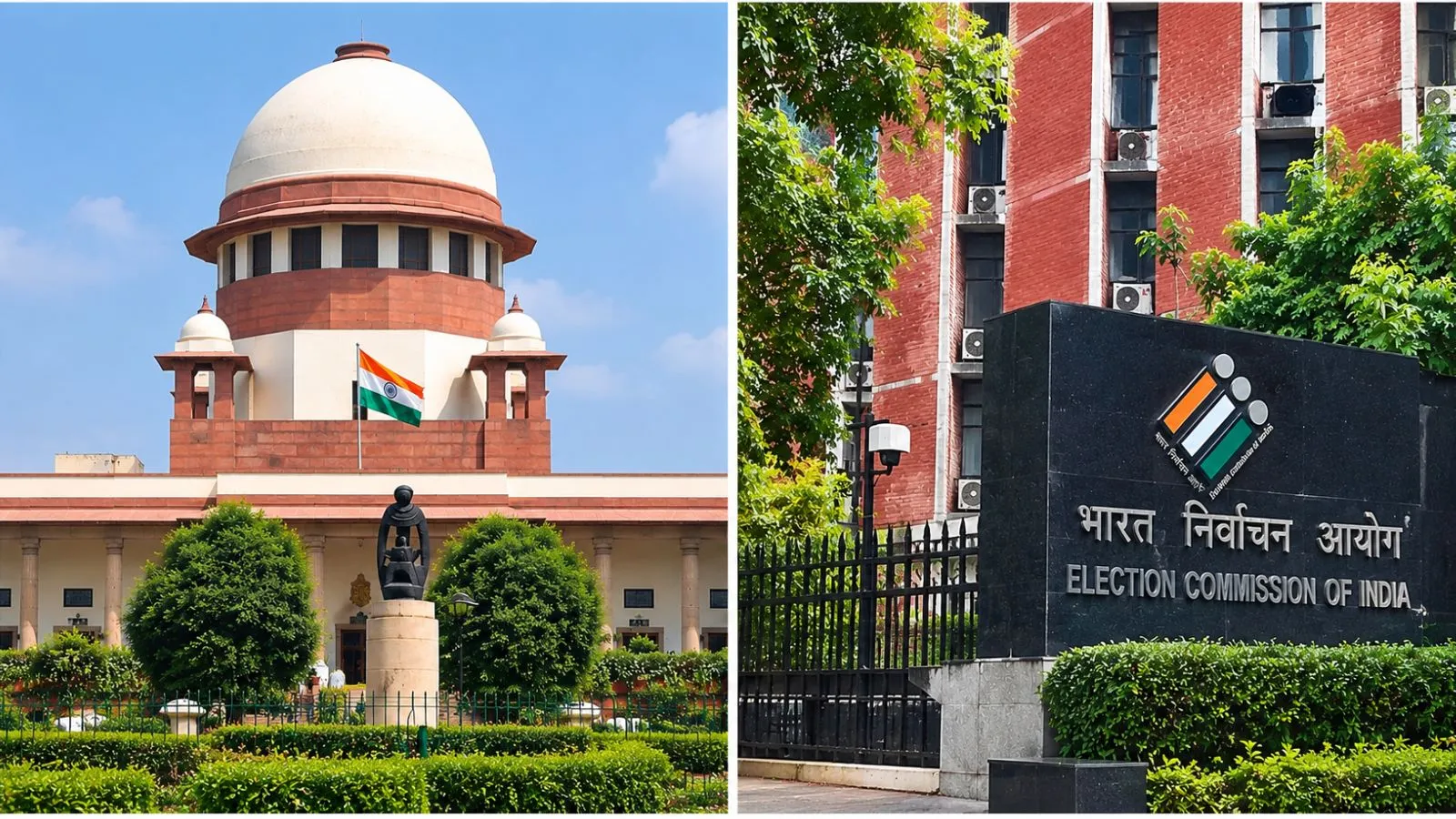
The Supreme Court has sought responses from the Centre and Election Commission over a law granting lifelong legal immunity.
What Has the Supreme Court Ordered?
The Supreme Court on November 4, 2026, issued notices to the Union government and the Election Commission of India on petitions challenging Section 16 of the Chief Election Commissioner and Other Election Commissioners (Appointment, Conditions of Service and Term of Office) Act, 2023.
A Bench headed by Chief Justice of India Surya Kant sought responses to petitions filed by RJD MP Manoj Jha, represented by Tanya Srivastava, and advocate Arun Kumar Agrawal, represented by advocate Neha Rathi. The provision grants protection against civil and criminal proceedings concerning official acts, including after retirement. The court listed the petitions for December 18.
Why Is Section 16 Being Challenged?
The petitioners argued that Section 16 grants excessively broad protection to the Chief Election Commissioner and Election Commissioners, placing certain official actions beyond judicial scrutiny. They contended that the provision violates the Constitution’s basic structure by restricting judicial review.
One petition stated, “Section 16 of the Act bars jurisdiction of Constitutional courts and interferes with the power of judicial review, held to be a part of the Basic Structure of Constitution.“
Agrawal’s petition further argued that the provision could prevent proceedings involving corruption, forgery and other serious offences, even where the alleged conduct falls outside lawful authority. The challenge also questioned the absence of any distinction between actions undertaken in good faith and those involving alleged misconduct.
What Constitutional Concerns Have Been Raised?
The petitioners maintained that lifelong protection from legal proceedings was disproportionate to the objective of safeguarding the independence of election officials. They argued that such immunity could undermine accountability and restrict access to legal remedies.
“The object to ensure independence by taking such sweeping measures fails the test of proportionality. That every person has a right to a remedy and to a fair investigation, and access to justice is a facet of Articles 14 and 21,” the petitions highlighted.
Rathi also pointed out that the Election Commission had conducted elections for decades without such blanket statutory immunity. She submitted, “Despite the absence of such blanket immunity, the Election Commission has successfully conducted elections over several decades.” The petitioners maintained that institutional independence did not require unrestricted protection from legal proceedings.
How Does This Compare With Constitutional Immunity?
The petitions drew comparisons with Article 361 of the Constitution, which provides specified protections to the President and State Governors in relation to their official functions. They argued that even these constitutional safeguards are subject to limitations.
The petitioners submitted, “However, even their immunity is not absolute and Article 361 bars criminal proceedings against the President and the Governors only during the term of office and permits civil proceedings after notice.”
They further argued that judges of constitutional courts do not enjoy absolute immunity from civil or criminal proceedings. According to the petitions, Section 16 therefore raises significant questions about proportionality, accountability and equality before the law.
The Supreme Court has not ruled on the constitutionality of the provision. Its decision to seek responses places the legal challenge before the Centre and Election Commission for further examination at the next hearing.