

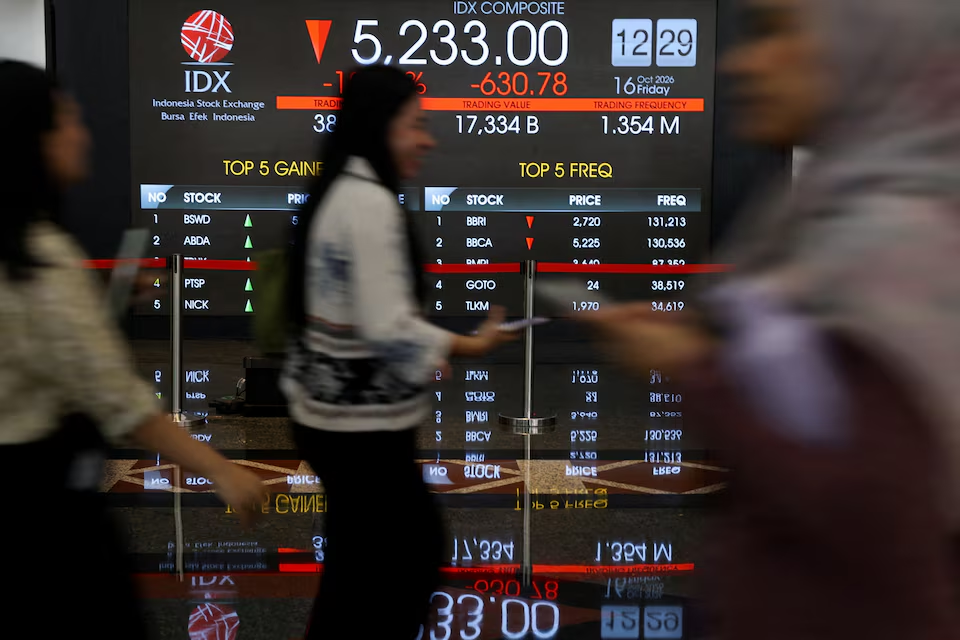

Indonesia has introduced a series of stringent market surveillance measures and regulatory overhauls aimed at rebuilding investor confidence after global index provider MSCI warned that the country risks being downgraded from emerging market to standalone status. The warning from MSCI highlighted deep concerns over opaque trading practices, low free-float liquidity, and suspected coordination among market participants to manipulate equity prices. In response, the Indonesia Stock Exchange is broadening oversight bodies to include independent experts, academic figures, and foreign investor representatives, while financial regulators prepare a more aggressive framework to detect and punish irregular market transactions.
Direct Surveillance and Powers to Freeze Accounts
Beginning in November, the stock exchange will implement a proactive enforcement model designed to directly target suspected coordinated trading and price rigging. Exchange chief Jeffrey Hendrik confirmed that authorities will gain the authority to freeze suspicious investor accounts upon detecting abnormal patterns. This represents a significant shift from previous protocols, where the bourse primarily issued public warnings about unusual market activity or sought formal explanations from listed companies before resorting to temporary trading suspensions.
Capital market supervisor Hasan Fawzi noted that the regulatory priority centers on strengthening surveillance methodologies to identify synchronized buying and selling before systemic distortions take hold. By shifting away from relying solely on sharp price movements or post-facto corporate explanations, market regulators aim to intervene directly when illicit patterns emerge. The credibility of the overhaul will hinge on the speed and impartiality with which the exchange executes these new powers against offending accounts.
Index Exclusions and Extended Buyback Flexibilities
To safeguard benchmark integrity, the exchange announced that 80 companies characterized by highly concentrated share ownership will be removed from the main Jakarta index starting November 2. Officials explained that limited free float leaves tightly held equities highly susceptible to volatility and artificial price swings, distorting the index’s representation of genuinely tradable shares. The move comes in the wake of a historic market sell-off on October 16 and 19, which saw the benchmark index register its steepest two-day drop to reach its lowest level since 2020.
Market turbulence lingered into subsequent sessions, with the main index slipping 0.6 percent and the Indonesian rupiah weakening by 0.4 percent to hit its lowest level since July on the morning of October 26. Alongside the index expulsions, the financial regulator extended a rule until June 2027 that permits companies to buy back their own shares without securing prior shareholder meeting approval. The provision aims to provide listed firms with operational flexibility to stabilize share valuations during severe market drawdowns, provided they continue to meet mandatory minimum free-float thresholds.
Intensified Reforms Under Global Benchmark Scrutiny
The latest regulatory push follows an earlier caution in January, when MSCI warned of a possible downgrade to frontier market status if market transparency concerns were ignored. The subsequent threat of a reclassification to standalone status prompted Indonesian authorities to engage in active dialogue with international index providers, including MSCI and FTSE Russell, while imposing record fines for manipulation and increasing public disclosure mandates for investor accounts.
The dispute has drawn high-level political attention, with President Prabowo Subianto stating during a recent cabinet meeting that Indonesia would not be intimidated by MSCI’s warnings. Even as political leaders defend national financial autonomy, market authorities have acknowledged the necessity of structural improvements. Financial officials commended domestic investors for stepping in to purchase fundamentally sound shares following the October decline, but regulators recognize that sustained international credibility requires demonstrable enforcement against coordinated trading alongside transparent ownership structures.
Follow for daily updates on cybercrime, corporate fraud, DFIR, hacking, investigations, and digital forensics
