

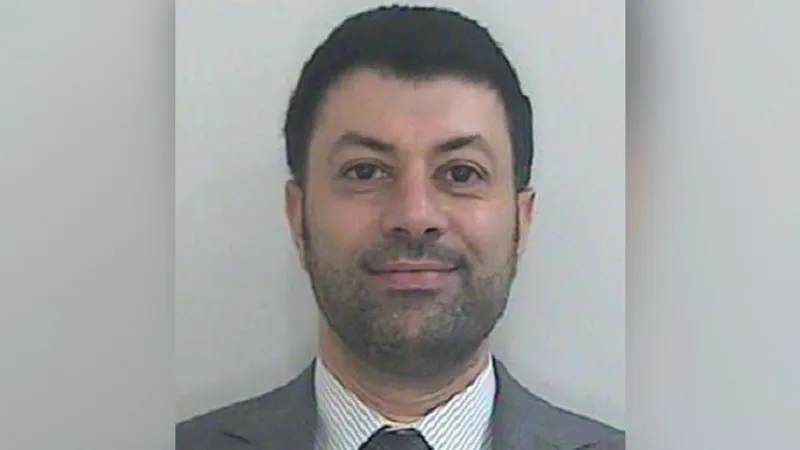

A British businessman convicted of orchestrating one of the United Kingdom’s largest value-added tax fraud networks remains at large in Dubai, evading a 20-year prison sentence while a multimillion-pound confiscation order remains tied up in appellate courts. Arif Patel, originally from Preston in Lancashire, was found guilty in his absence in 2023 of leading an organised criminal syndicate that stole more than £33 million, equivalent to over 4,190 crore Indian rupees, from public revenues through a carousel fraud scheme. Investigators determined that the illicit operation attempted to claim more than £90 million, approximately 11,430 crore Indian rupees, from the British tax system before interventions halted the remaining payouts.
Textile Empire Masked Multi-Million Tax Carousel Scheme
During the early 2000s, Patel maintained a prominent public profile as a thriving northern entrepreneur. His Preston-based firm, Faisaltex, manufactured and supplied garments, socks, and nightwear to commercial retail chains. His reported financial standing reached £105 million, around 13,330 crore Indian rupees, earning him a place on the Sunday Times Rich List in 2006. His family expanded into local sports investments when his teenage son secured a minority stake in Preston North End Football Club in 2007, alongside commercial announcements proposing a 19-storey central city development valued at £100 million, or roughly 12,700 crore Indian rupees.
Behind this corporate facade, revenue officials discovered an extensive carousel tax scheme. The fraud utilized artificial commercial transaction chains across international borders to systematically claim VAT refunds that were never due. Unlike typical carousel arrangements dealing in electronics, Patel utilized textile shipments, such as an intercepted freight container of supposedly Swiss-made hats exported back to Switzerland. A prolonged investigation by His Majesty’s Revenue and Customs proved the enterprise diverted more than £33 million before enforcement operations shut it down, while preventing further attempted claims that pushed total targeted state funds past £90 million.
Flight to the Emirates and Convictions in Absentia
Patel faced formal prosecution alleging conspiracy to defraud tax authorities, false accounting, money laundering, and trading in counterfeit merchandise. During a 2011 appearance at Bolton Crown Court, he secured permission to travel to Dubai while on bail. He promptly left Britain and never returned, while his brothers, Munaf and Faisal, also fled the country prior to facing formal charges. British extradition efforts proved unsuccessful.
Across the following three years, courts convicted 24 co-conspirators tied to the wider syndicate, handing down custodial sentences totaling over 116 years. Law enforcement seized more than £78 million, equivalent to roughly 9,900 crore Indian rupees, in related criminal assets, which included ordering the public auction of Patel’s personal Ferrari Superamerica. Despite Patel’s eventual trial and conviction in absentia in 2023, former enforcement officials noted that the absence of physical custody left the judicial process unresolved. Allegations surfaced that Patel’s representatives made overtures in 2020 proposing financial restitution without personal surrender, though discussions stalled due to his refusal to return to the UK.
Legal Gridlock Over Asset Recovery and Online Visibility
Court authorities subsequently imposed a £90.5 million confiscation order, amounting to roughly 11,490 crore Indian rupees, intended to recoup illicit proceeds for the public treasury. That recovery process remains stalled after Patel launched a legal challenge before the Court of Appeal. Margaret Hodge, the British government’s anti-corruption champion, publicly condemned the delays, stating wealthy fugitives must not exploit court mechanisms to indefinitely postpone criminal accountability and asset recovery.
Meanwhile, inquiries into Patel’s residency in Dubai revealed an expanding web footprint. Online press releases, social media accounts, and promotional sites portrayed him as an active philanthropist and global investor, occasionally employing stock imagery or photographs of other figures alongside supportive claims using names matching British enforcement personnel. Several sites traced back to a local reputation management agency. Verified photographs, confirmed via facial recognition matching, later documented Patel attending prominent social events in Dubai. Patel, his brothers, his Manchester-based legal counsel, and Dubai authorities declined to comment on the matter.
Follow for daily updates on cybercrime, corporate fraud, DFIR, hacking, investigations, and digital forensics
