

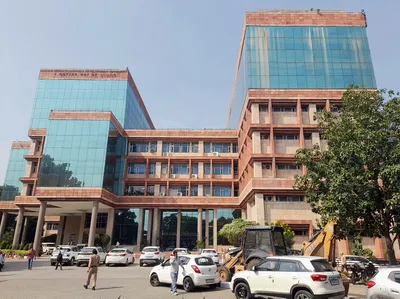

The Enforcement Directorate has approached the Punjab Police seeking the registration of a first information report against senior officials of the Greater Mohali Area Development Authority and directors of Delhi-based Remigate Buildestates Private Limited over alleged irregularities in a commercial land deal. The financial probe centers on the auction of a 1.13-acre food court site in Sector 62, Mohali, and the subsequent granting of relief worth nearly Rs 57 crore in outstanding dues to the private firm. The agency is scrutinizing whether standard administrative procedures were bypassed and examining the specific roles played by authority officials in authorizing the massive reduction in liabilities.
Scrutiny of Official Records and Questioning of Engineers
Investigators from the directorate have already questioned key engineering personnel associated with the development body to trace the administrative trail behind the financial relief. In August 2026, the agency examined GMADA Chief Engineer Ajay Garg, alongside former Chief Engineer Sunil Kansal and former Estate Officer Hardeep Singh. The officials were required to present official documentation, payment ledgers, and correspondence concerning the site auction, the accumulation of unpaid dues, and the subsequent relief extended to the private company. The agency’s formal request to the state police highlighted contradictions in these records and the testimony gathered during questioning.
The inquiry was reinforced by an extensive search operation conducted at the development authority’s headquarters between September 22 and 24, 2026, which lasted approximately 50 hours. Directorate teams impounded case files, assessment records, and digital correspondence relating to post-auction financial decisions. The collected material is undergoing detailed forensic audit to determine whether the concessions caused direct revenue loss to the state exchequer, while legal proceedings continue to establish official culpability.
State Revokes Forty-Crore Relief Order Following Agency Push
The regulatory oversight culminated in immediate administrative action when the Punjab Housing and Urban Development Department intervened to reverse earlier decisions. Acting as the revisional authority, the department’s Principal Secretary dismissed a revision petition filed by Remigate Buildestates and rescinded an order dated February 5, 2026, which had been issued by the authority’s Additional Chief Administrator-cum-Appellate Authority to grant the company a waiver of Rs 40 crore. The withdrawal of the waiver came directly after the enforcement agency flagged the financial discrepancies to the state police chief.
The cancellation of the order has redirected investigators to the specific decision-making tiers within the development body. The enforcement team is assessing whether the financial concessions were granted in violation of statutory property management guidelines. A central element of this track of inquiry involves examining how the initial auction terms of Rs 32.50 crore, settled in September 2015, were progressively modified to write off mounting liabilities before the relief was ultimately struck down.
Judicial Custody of Real Estate Promoter Deepens Inquiry
The enforcement net widened significantly last week with the arrest of real estate businessman Jagmohan Garg, who was remanded to judicial custody following his apprehension. Garg serves as the promoter of Tirupati Infraprojects, an entity that corporate filings indicate exercised operational and administrative control over Remigate Buildestates. His arrest has opened additional lines of investigation into fund movements and inter-corporate transactions connected to the Mohali property.
Investigators are now mapping the broader nexus connecting the company’s directors, corporate affiliates, and local planners. By pressing for a formal police first information report, the directorate aims to establish parallel criminal proceedings alongside its ongoing money laundering investigation. Agency officials maintain that the dual-track inquiry is essential to comprehensively review the original land allotment, the computation of outstanding levies, and the administrative machinery that facilitated the unlawful waiver.
Follow for daily updates on cybercrime, corporate fraud, DFIR, hacking, investigations, and digital forensics
