

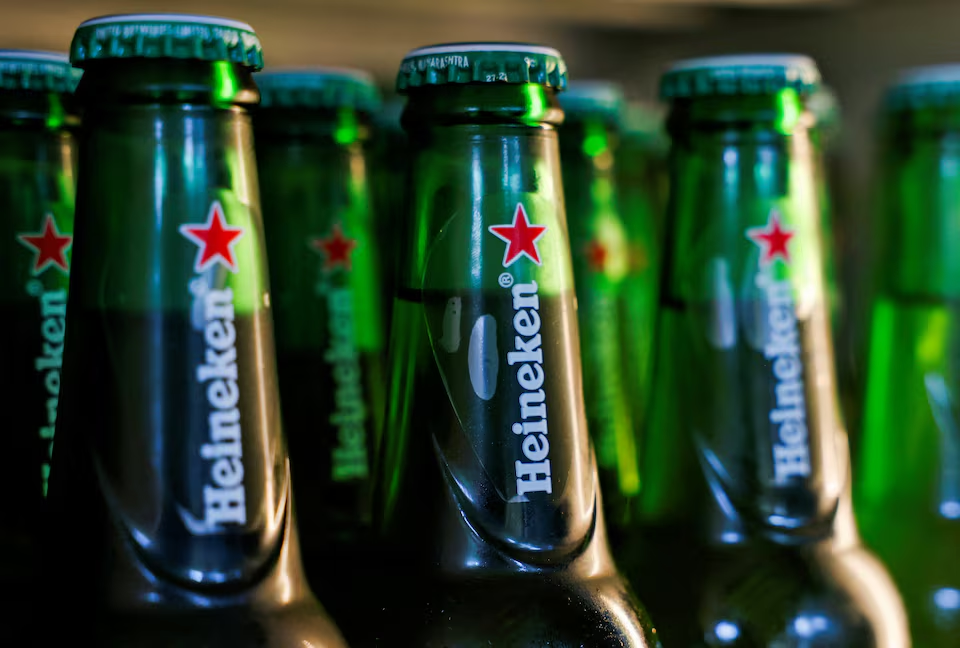

A Dutch court has ordered brewing multinational Heineken to pay 111 million euros, approximately 1,150 crore rupees, in damages and interest to its Greek rival Macedonian Thrace Brewery. The judgment penalises the company for anti-competitive behaviour carried out by its local subsidiary, Athenian Brewery, in Greece between 1998 and 2014. The award handed down by the Amsterdam District Court comprises roughly 43 million euros, or 445 crore rupees, in direct financial compensation, alongside 68 million euros, or 705 crore rupees, in accumulated statutory interest. The Dutch brewing group rejected the court’s reasoning and announced that it will appeal the decision, ensuring that the prolonged dispute will move into further appellate review.
Legal Battle Rooted in Historical Market Abuse
The litigation stems from a long-running controversy over Athenian Brewery’s commercial dominance and sales practices in the Greek beverage industry. Greece’s competition authority originally penalised the subsidiary in 2015, levying a 31.5 million euro fine after determining that the company abused its market position across production and distribution channels. The Athens Administrative Court of Appeal later trimmed that penalty to 26.7 million euros in 2017. Following the regulatory enforcement, Macedonian Thrace Brewery lodged a follow-on damages lawsuit in the Netherlands, seeking recovery for business losses and lost sales caused by Athenian Brewery’s market practices. The latest Amsterdam ruling represents the first formal judicial valuation of the losses sustained by the independent Greek producer.
Disagreement Over Financial Loss Projections
Heineken challenged the ruling, arguing that the court relied on flawed hypothetical models to establish the financial impact on Macedonian Thrace Brewery. According to the company, the damages determination depended heavily on speculative scenarios concerning market share, pricing policies, and operating profitability rather than empirical economic data. Heineken stated that the judicial calculations failed to account properly for prevailing macroeconomic factors and real market shifts during the multi-year infringement period. The company intends to focus its appeal on challenging the valuation methodology, attempting to reduce or completely eliminate the financial burden before the appellate bench reaches a final determination.
Small Brewer Hails Verdict as Crucial Turning Point
Macedonian Thrace Brewery welcomed the ruling as an important validation of its efforts to enforce fair competition across the European beer market. Demetri Chriss, the company’s director of business development, described the judgment as a historic milestone, stating that the firm had spent nearly three decades seeking legal accountability for the harm caused to its commercial operations. While the verdict establishes an immediate financial liability for Heineken, the ultimate execution of the payout remains dependent on the outcome of the appeal. The litigation underscores the substantial monetary risks large corporations face from long-tail private enforcement claims arising years after regulatory antitrust findings are confirmed.
Follow for daily updates on cybercrime, corporate fraud, DFIR, hacking, investigations, and digital forensics
