
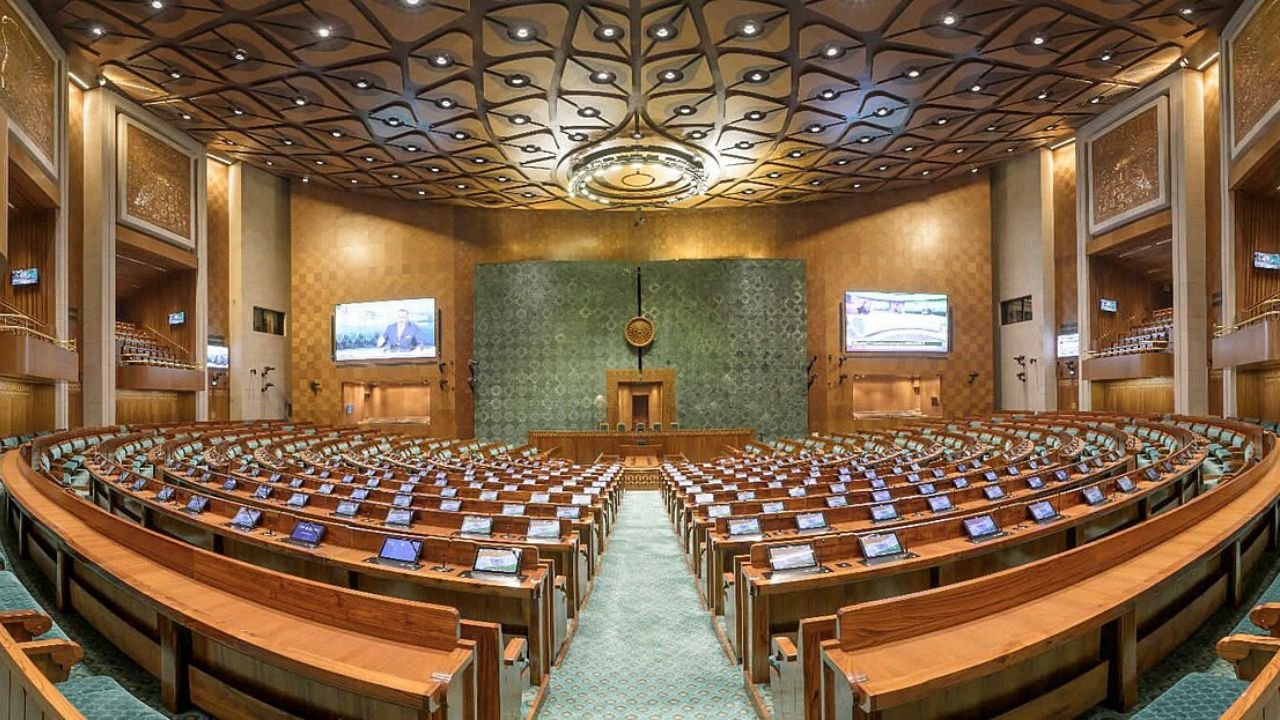

In a written reply to the Lok Sabha, Law Minister Arjun Ram Meghwal disclosed that 8,639 complaints were filed against sitting judges between 2016 and 2025. The figure, drawn from records maintained by the Chief Justice’s office and other judicial authorities, offers a rare quantitative glimpse into public dissatisfaction with members of India’s higher judiciary.
The data show a steady flow of grievances over the years, culminating in 2024, when 1,170 complaints were received — the highest in a single year during the period under review. While the government did not detail the nature of the allegations, such complaints typically range from claims of judicial impropriety and delays to accusations of misconduct or perceived bias.
Certified Cyber Crime Investigator Course Launched by Centre for Police Technology
Legal observers note that rising complaint numbers may reflect multiple factors: growing public awareness of grievance mechanisms, increased digitisation of complaint portals, and heightened scrutiny of public institutions in an era of social media amplification.
The In-House System: Oversight Within the Judiciary
The government emphasised that complaints against Supreme Court and High Court judges are not investigated by external agencies. Instead, they are handled under what is known as the “in-house procedure” — a mechanism developed by the Supreme Court in 1997 to address concerns about judicial conduct.
Under this framework, complaints against Supreme Court judges and Chief Justices of High Courts are examined by the Chief Justice of India. Allegations against other High Court judges are addressed by the respective Chief Justices of those courts.
The in-house system was established through a set of guidelines outlining expected standards of judicial conduct and the internal steps to be followed if those standards are alleged to have been breached. While the process allows for preliminary scrutiny and, in serious cases, the formation of inquiry committees, it remains fundamentally internal — a feature that has periodically drawn debate from legal scholars and civil society groups.
Supporters argue that judicial independence requires insulation from executive interference. Critics counter that internal review mechanisms may lack transparency and public accountability.
Digital Portals and the Flow of Grievances
In recent years, the complaint process has increasingly shifted online. The government confirmed that grievances are frequently filed through the Centralized Public Grievance Redress and Monitoring System (CPGRAMS), a digital platform designed to allow citizens to register complaints against public authorities.
However, complaints against judges submitted through CPGRAMS do not remain within the executive branch. According to the Law Minister’s reply, such grievances are forwarded to the concerned Chief Justice, who alone is authorised to take action.
This dual pathway — public-facing digital submission followed by internal judicial handling — underscores the layered nature of India’s institutional architecture. It also highlights a structural distinction: while citizens may use government platforms to lodge complaints, the authority to investigate or discipline judges lies solely within the judiciary.
Transparency, Accountability and Judicial Independence
India’s Constitution provides limited avenues for formal action against judges of the higher judiciary. Removal requires impeachment by Parliament — an extraordinary and politically complex process that has rarely been completed.
As a result, the in-house system functions as the primary mechanism for addressing allegations short of impeachment. Yet the details of individual complaints and their outcomes are seldom made public, except in exceptional cases.
Legal analysts say that this arrangement reflects a careful balance between two principles: safeguarding judicial independence from political pressure and ensuring accountability for misconduct.
The disclosure of complaint figures in Parliament does not, by itself, illuminate how many grievances were dismissed, how many resulted in inquiry, or what corrective actions — if any — followed. But the numbers provide context for a broader conversation about institutional trust.
In a democracy where courts are frequently called upon to adjudicate constitutional disputes and safeguard civil liberties, public confidence in judicial integrity remains a foundational concern. The data placed before Parliament offer a statistical measure of scrutiny — and a reminder that even the highest offices of the judiciary are not immune from public grievance.
For now, the oversight mechanism remains firmly within judicial walls, shaped by rules drafted nearly three decades ago and sustained by the principle that courts must regulate themselves.
About the author — Suvedita Nath is a science student with a growing interest in cybercrime and digital safety. She writes on online activity, cyber threats, and technology-driven risks. Her work focuses on clarity, accuracy, and public awareness.
