
Follow us on Google News

Bengaluru: A fresh financial fraud linked to the collapsed Sri Guru Raghavendra Sahakara Bank Niyamitha has surfaced in Karnataka’s capital, where builders and former bank officials allegedly colluded to secure massive loans by mortgaging 127 residential plots that had already been sold to private individuals. The outstanding dues, including accumulated interest, have mounted to ₹961 crore, plunging 127 families who purchased the land into deep uncertainty over their legal ownership. The affected properties are situated in Sri Shankara Layout at Kambipura village under Kengeri hobli, an enclave approved by the Bangalore Development Authority. Registered documents show that the developers executed absolute sale deeds in favour of individual buyers between 2011 and 2015, only for the same land to be pledged as collateral with the bank years later.
Sold Residential Properties Pledged as Collateral in 2019
The registered residents’ welfare association of the layout recently discovered that the plots had been encumbered and submitted a formal objection to the bank administrator on July 16, 2026. The association pointed out that two mortgage deeds registered on October 31, 2019, followed by two rectification deeds on November 28, 2019, placed the entire layout as security for loans extended by the lender. These documents specifically refer to M. Vasudev Maiya, who served as the bank’s chief advisor during that period.
The welfare body questioned how the financial institution could have accepted the properties as collateral when absolute sale deeds had been executed in favour of buyers several years earlier. Characterising the transaction as a criminal breach of trust carried out in connivance with former bank personnel, the association demanded that the administration halt any recovery measures that could threaten the physical possession, title rights, or legal interests of the legitimate plot owners.
Unsecured Credit Concealed Through Complex Rollover Accounts
A formal notice sent by the bank to the developers in January 2026 revealed that the initial borrowing totalled ₹739.87 crore across several individuals, an amount that subsequently swelled to ₹961 crore with interest. Despite these substantial liabilities, bank authorities reportedly lack an accurate assessment of the market value of the mortgaged assets. The pledged holdings span an estimated 45 to 50 acres across Bengaluru, with the most distant parcel located in Chintamani in Kolar district.
Speaking on condition of anonymity, bank officials stated that similar irregularities occurred in 10 to 15 property mortgage transactions. Unsecured loans were allegedly bundled alongside property-backed debt in an effort to mask audit deficiencies, creating what officials describe as rollover accounts. A senior bank representative explained that while an original applicant might have received between ₹10 crore and ₹12 crore, the remaining proceeds were diverted to third parties. In the transaction involving Sri Shankara Layout, funds were reportedly disbursed to 23 other individuals and corporate entities, casting serious doubt on internal due diligence and disbursement oversight.
Bank Begins Document Verification to Determine Ownership Rights
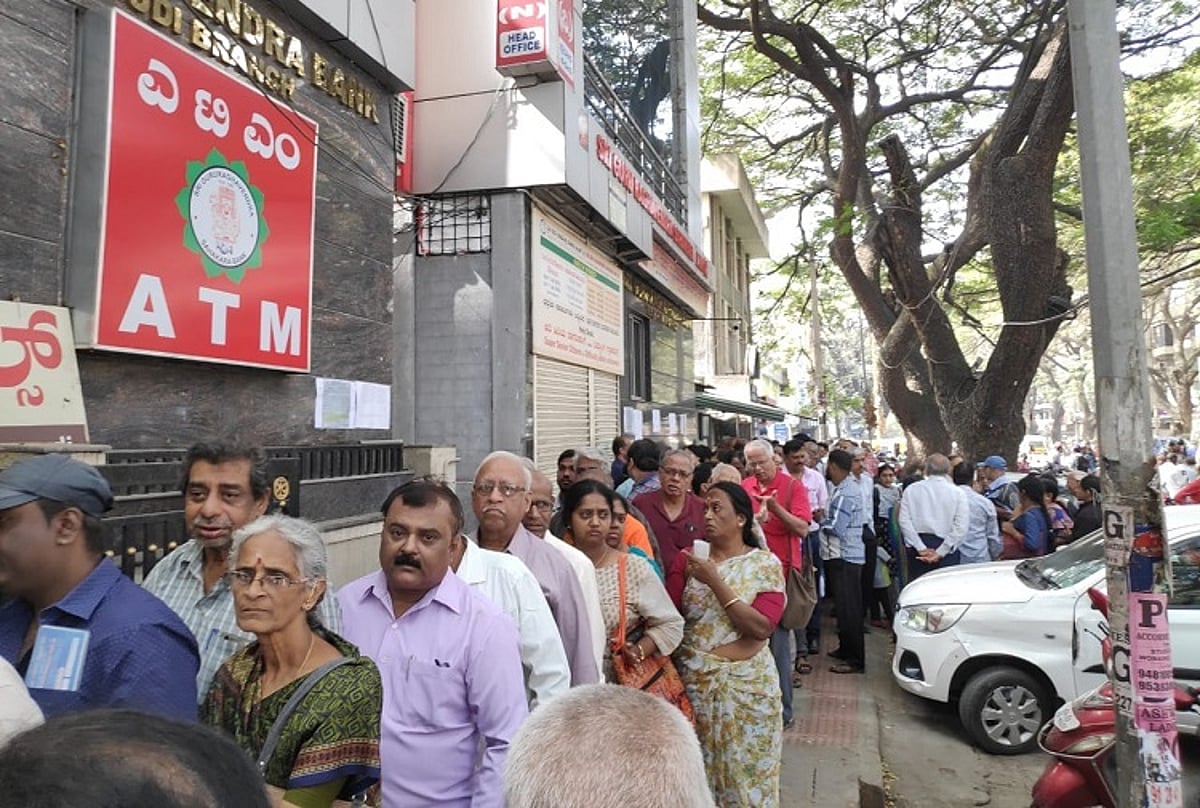
Sri Guru Raghavendra Sahakara Bank Niyamitha, an institution based in south Bengaluru, collapsed more than five years ago, leaving hundreds of depositors in severe financial distress. To address the current dispute, bank representatives stated they will verify whether individual plots were sold before or after the registration of the 2019 mortgage deeds, maintaining that properties transferred prior to that period cannot legally be targeted for recovery.
The bank has directed individual plot owners to submit their respective title deeds for formal verification. Institutional examiners plan to cross-reference the execution dates on the sale deeds against the registered mortgage instruments. For the 127 families holding registered deeds from 2011 to 2015, the outcome of this scrutiny remains critical to defending their homes against recovery actions arising from the developers’ alleged fraud.