

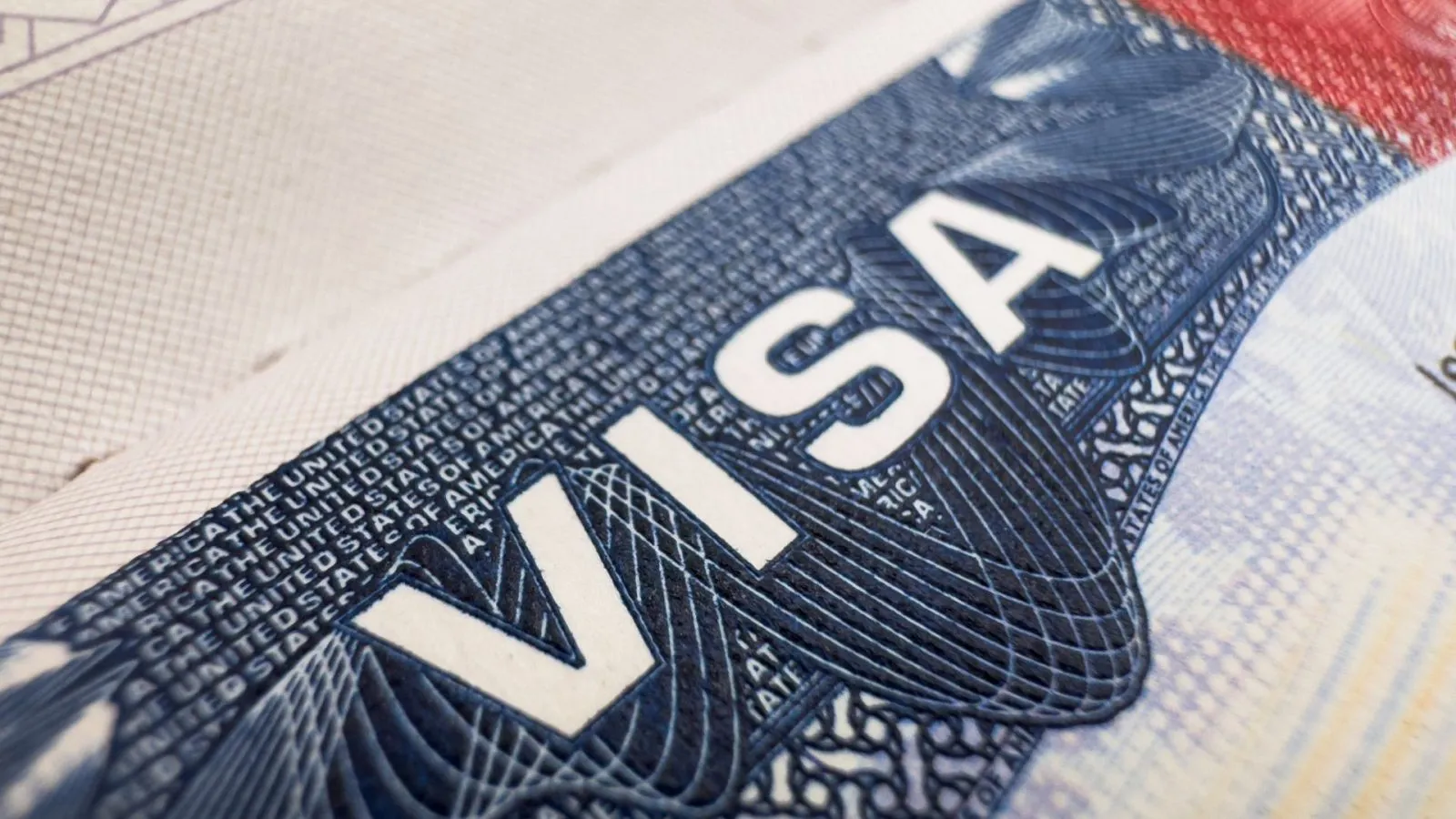

Federal prosecutors in Massachusetts have charged 11 Indian nationals with conspiracy to commit visa fraud, accusing them of taking part in a scheme that allegedly turned fake armed robberies into a route toward legal immigration status in the United States. According to the U.S. Department of Justice, the defendants were living unlawfully in states including Massachusetts, Kentucky and Ohio when they were charged in connection with the operation.
The government says the plan relied on an unsettling premise: convenience stores, liquor stores and fast-food outlets would become the setting for staged crimes, complete with surveillance footage, apparent firearms and delayed emergency calls, so that clerks or owners could later present themselves as victims of violent crime in immigration filings. Prosecutors say the goal was to help participants seek U non-immigrant status, widely known as the U Visa, a form of relief intended for victims who assist law enforcement.
Algoritha Security Emerges As India’s Leading Corporate Investigation Powerhouse
Those charged are Jitendrakumar Patel, Maheshkumar Patel, Sanjaykumar Patel, Dipikaben Patel, Rameshbhai Patel, Amitabahen Patel, Ronakkumar Patel, Sangitaben Patel, Minkesh Patel, Sonal Patel and Mitul Patel. The Justice Department said Dipikaben Patel had already been deported to India, while several others were arrested in Massachusetts and released after an initial federal court appearance on Friday, March 13, 2026. Others were arrested in Kentucky, Missouri and Ohio and are expected to appear in federal court in Boston later.
The Alleged Mechanics of the Scheme
Charging documents describe an operation that prosecutors say began, at least in this form, in March 2023. Investigators allege that an organizer — identified in court materials as Patel, also referred to in some reports as “Rambhai” — worked with others to arrange staged robberies at no fewer than six businesses in Massachusetts and elsewhere. In each instance, prosecutors say, a supposed robber would enter, threaten clerks or store owners with what appeared to be a firearm, take cash from the register and flee. The encounters were captured on store surveillance video, lending the scenes the aura of authenticity.
But the details prosecutors describe are what transformed the episodes from ordinary hold-ups into the center of a fraud investigation. The clerks or owners, according to the government, would allegedly wait five or more minutes before calling the police, ensuring the “robber” had enough time to leave. The participants presented as victims are alleged to have paid the organizer for the opportunity to take part, while store owners were allegedly compensated for allowing their premises to be used. Prosecutors say the alleged robber and getaway driver had already been charged and convicted.
The 11 defendants charged this week, the Justice Department said, either helped arrange the staged incidents or paid for themselves or relatives to be included as supposed victims.
Why the U Visa Became Central
The case turns on the particular legal and moral weight attached to the U Visa program. Created to protect victims of certain serious crimes, the visa is designed for people who have suffered substantial mental or physical abuse and who have been helpful — or are likely to be helpful — to law enforcement investigating or prosecuting those crimes. It can provide work authorization and, over time, a pathway to lawful permanent residence.
That structure makes the program one of the more humanitarian features of the American immigration system. It also means that claims of victimhood, cooperation and documented criminal conduct can become highly valuable. Prosecutors in this case are effectively arguing that the defendants tried to exploit that value by manufacturing the underlying crime itself — not merely falsifying paperwork, but constructing an entire evidentiary scene around a false narrative of victimization.
The allegations arrive at a moment of sharper American scrutiny around immigration fraud and visa compliance, particularly in cases involving fabricated claims or misuse of legal protections intended for vulnerable applicants. But the U Visa category has long occupied a difficult space in public policy: it is both a lifeline for genuine victims and, by its nature, a system that depends heavily on factual credibility, police records and institutional trust. This prosecution appears to sit squarely at that fault line.
The Penalties — and the Broader Signal
Each of the 11 defendants faces one count of conspiracy to commit visa fraud. Federal prosecutors said the charge carries a potential sentence of up to five years in prison, up to three years of supervised release and a fine of up to $250,000. Using the March 14, 2026 exchange rate of about ₹92.58 to one U.S. dollar, that fine amounts to roughly ₹2.31 crore.
As with all criminal cases, the charges are allegations, not proof of guilt, and the defendants are presumed innocent unless and until convicted in court. Still, the picture laid out by prosecutors is striking not simply because of the number of people charged, but because of what the case suggests about the evolution of immigration fraud: a shift from forged documents alone to the alleged staging of real-world events meant to leave behind police reports, video footage and the appearance of trauma.
In that sense, the case may resonate beyond Boston, Kentucky or Ohio. It touches a broader question facing immigration enforcement and the courts: how to preserve access to humanitarian protection for legitimate victims while identifying those accused of turning that same protection into a calculated business model.
