
Follow us on Google News

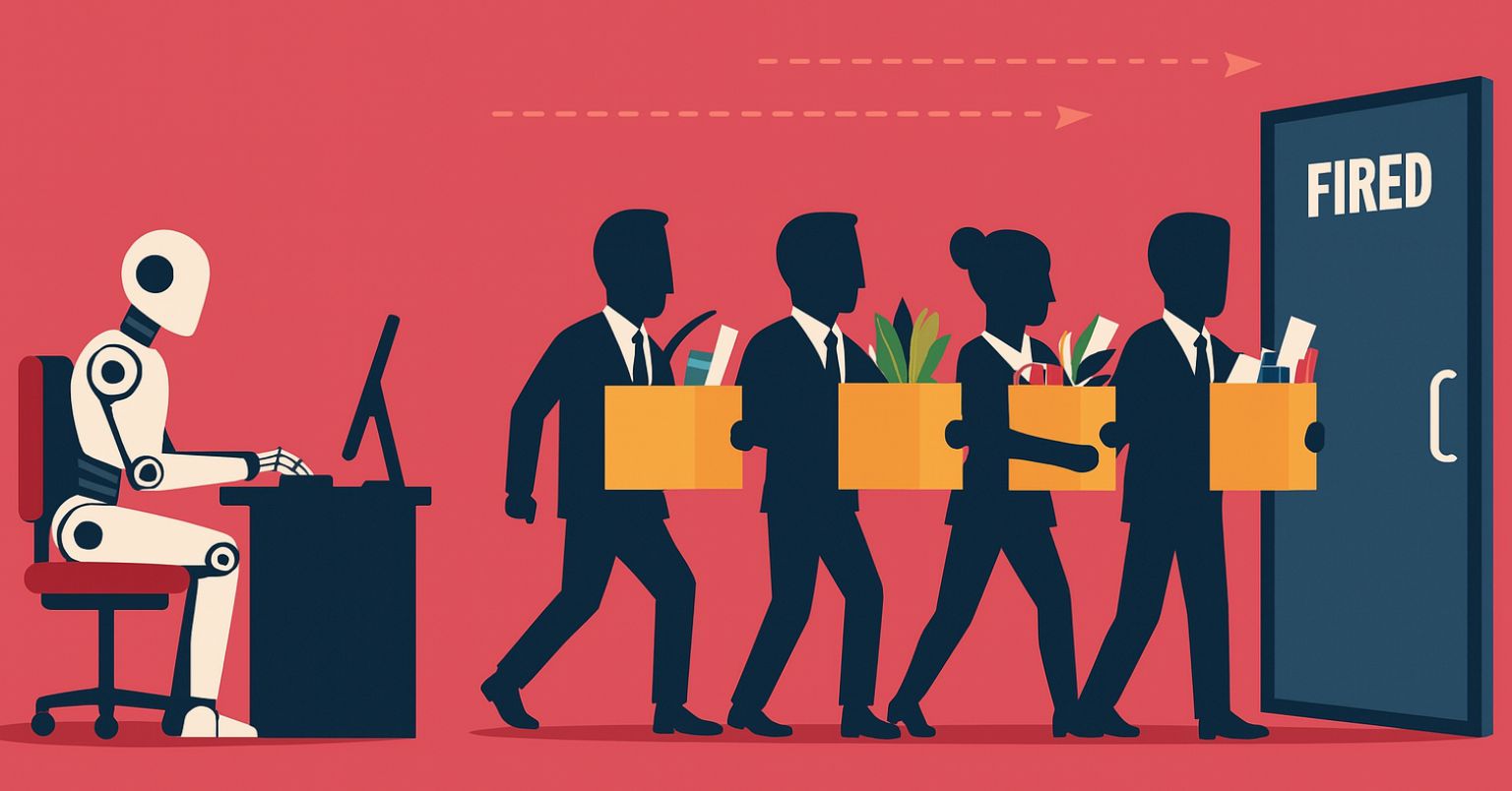
US companies are rehiring workers previously replaced by artificial intelligence as automation struggles to match human expertise.
New research from talent assessment firm SHL indicates that nearly one in five American workers have experienced what the company describes as AI rebounding, where employers replace staff with artificial intelligence before asking them to return. The findings suggest that some businesses are reconsidering automation decisions after discovering that AI systems cannot fully perform tasks previously handled by experienced employees.
What Does the SHL Survey Reveal?
SHL’s survey, conducted in June and published recently, found that 19.1% of US respondents had been replaced by AI and subsequently asked to return to their jobs. Across the United States and United Kingdom, the figure stood at 16%.
However, returning employees are demanding better employment conditions. Among those surveyed, 51% sought substantial salary increases, 42% wanted written assurances about job security, and 40% demanded greater transparency regarding AI use in their roles.
Lucy Beaumont, SHL’s global senior vice president of product and design, attributed the trend to organisations automating jobs without adequately assessing the human capabilities involved. When technology fails to deliver expected results, companies may face higher costs to rehire experienced workers.
https://the420.in/fcrf-certified-chief-ai-officer-second-cohort-november-2026/
Where Is Artificial Intelligence Falling Short?
A separate July survey by recruitment firm Robert Half found that 32% of US hiring managers whose companies eliminated jobs because of AI subsequently restored the same or similar positions. Among those managers, 40% identified institutional knowledge and workplace context as capabilities that AI could not adequately reproduce. Another 39% cited relationship management, while an equal proportion reported increased business demands. Additionally, 38% said automated systems required more human supervision and quality control than anticipated.
The findings indicate that automation can create operational difficulties when businesses underestimate the importance of professional judgement, organisational experience and interpersonal responsibilities.
Why Are Klarna and Ford Reconsidering Automation?
Swedish financial technology company Klarna has resumed hiring human customer service representatives after previously relying heavily on AI chatbots. Chief executive Sebastian Siemiatkowski acknowledged that the company had moved too far towards automation.
A Klarna spokesperson said human representatives remained necessary for complex and sensitive customer interactions. The company has begun recruiting a limited number of highly skilled employees to identify areas where personal assistance provides greater value.
Automaker Ford also hired and promoted 350 experienced engineers in June after AI-powered quality control tools failed to meet expectations. Although Ford acknowledged improvements from AI, the company emphasised that experienced engineers possess technical knowledge developed through decades of design work.
Are AI-Related Job Cuts Still Increasing?
Despite some employers reversing earlier decisions, AI-related workforce reductions continue to rise. According to outplacement firm Challenger, Gray & Christmas, employers cited artificial intelligence in 121,401 announced job cuts through October 2026, more than double the 54,836 AI-related layoffs reported throughout 2025.
Research from Stanford’s Digital Economy Lab also identified employment pressures among younger workers. The study found that employment among workers aged 22 to 25 in occupations heavily exposed to AI was 19% below the level projected if those jobs had grown at the same pace as less-exposed occupations. Together, the findings illustrate contrasting developments in the labour market. While businesses continue eliminating positions through automation, others are restoring roles after encountering technological limitations.
The research also indicates that replacing experienced employees without adequately evaluating operational requirements can create additional recruitment costs and workforce uncertainty, particularly when specialised knowledge remains essential to business performance.