
Follow us on Google News

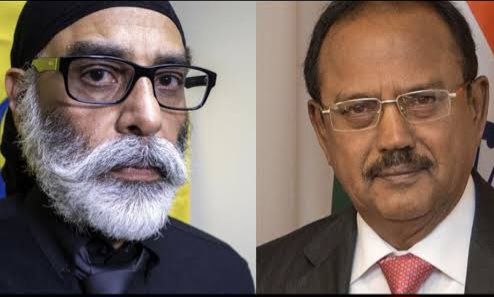
The United States Department of State has served summonses to the Government of India following instructions from an American court in connection with a civil lawsuit filed by Sikhs for Justice leader Gurpatwant Singh Pannun. Delivered through diplomatic channels via the Embassy of India in Washington, the legal proceedings name National Security Adviser Ajit Doval and former Research and Analysis Wing chief Samant Goel among the primary defendants. Pannun has initiated the civil action seeking financial damages over an alleged attempt on his life, accusing Doval and Indian intelligence operatives of orchestrating an assassination plot targeting him on American soil.
Court Directs Diplomatic Summons Over Alleged Assassination Plot
The legal action stems from an earlier criminal indictment pursued by the US Department of Justice involving Nikhil Gupta, an individual identified by American prosecutors as an Indian drug and arms trafficker. Gupta was apprehended by authorities in the Czech Republic in 2023 and subsequently extradited to the United States to face formal prosecution. Federal prosecutors charged Gupta with conspiring to hire a hitman to assassinate Pannun in New York, alleging that he coordinated operations directly with Vikash Yadav, who was stated to be an official affiliated with India’s external intelligence service, the Research and Analysis Wing. Gupta pleaded guilty to all charges brought against him earlier this year, with a federal court scheduled to hand down his formal sentencing later this month.
India Rejects Civil Lawsuit as Unwarranted and Unsubstantiated
New Delhi has firmly dismissed Pannun’s civil lawsuit, characterizing the legal filing as completely unwarranted and unsubstantiated. India has formally designated Pannun as an individual terrorist under domestic anti-terror laws, while categorizing Sikhs for Justice as an unlawful association. Indian authorities point to the group’s active involvement in the broader Khalistan separatist campaign, which previously fueled an insurgency in the state of Punjab for multiple decades before subsiding during the 1990s. Since that period, key figures and associated organizations within the separatist movement have maintained safe havens abroad, conducting political activity primarily out of bases in Canada and the United States. Officials have continually highlighted that these networks regularly incite violence directed at Indian diplomats and issue repeated public threats to carry out attacks against Indian territory.
Diplomatic Engagement and High-Level Inquiry Run Concurrently
In response to specific security and intelligence concerns shared directly by Washington regarding the criminal assassination conspiracy, the Government of India previously established an official high-level inquiry committee to investigate the matter thoroughly. While the formal inquiry continues its review of the inputs provided by US law enforcement agencies, Vikash Yadav, the individual named in the American indictment, is currently facing separate judicial proceedings within the Indian domestic court system. Despite these legal steps, the serving of diplomatic summonses by the State Department in the parallel civil action underscores the continuing diplomatic complexities between Washington and New Delhi, as Indian representatives maintain that civil claims brought forward by an internationally active separatist group lack factual foundation and legal validity.