
Follow us on Google News

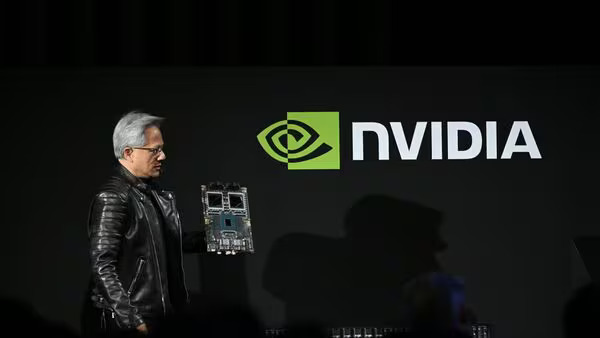
Nvidia CEO Jensen Huang lost nearly ₹1.42 lakh crore in a single day as US technology stocks suffered a sharp decline.
How Much Wealth Did Jensen Huang Lose?
According to Bloomberg, Huang’s wealth declined by approximately ₹1.42 lakh crore ($15.1 billion), pushing him to 13th place on the Bloomberg Billionaires Index and out of the world’s 15 richest individuals. The decline followed a sharp fall in Nvidia shares amid a broader sell-off in American technology stocks.
Other prominent technology billionaires also suffered substantial losses. Tesla CEO Elon Musk’s wealth fell by approximately ₹7.49 lakh crore ($79.7 billion), while Oracle founder Larry Ellison lost around ₹94,946 crore ($10.1 billion). The losses reflected growing investor concerns about technology valuations and the financial sustainability of artificial intelligence investments.
https://the420.in/fcrf-certified-chief-ai-officer-second-cohort-november-2026/
What Triggered the Technology Stock Sell-Off?
The Nasdaq 100 index lost approximately ₹235 lakh crore ($2.5 trillion) in market value on November 5 as Nvidia and other major technology companies experienced heavy selling pressure. The Nasdaq Composite fell 5.5% on Thursday, marking its steepest single-day decline since the market turmoil following US President Donald Trump’s tariff announcements in April 2025.
Nvidia shares declined 9%, while semiconductor company AMD recorded a steeper fall of 17% during the trading session. Earlier in the week, Nvidia had reached a market capitalisation of approximately ₹472 lakh crore ($5.02 trillion), reclaiming its position as the world’s most valuable company from Apple. The subsequent decline highlighted the volatility surrounding major technology stocks.
Why Are Investors Concerned About AI Investments?
The market downturn came amid growing uncertainty about the future of artificial intelligence infrastructure spending in the United States. Investors are increasingly examining whether technology companies can justify the substantial expenditure required to construct and operate AI data centres.
Analysts have warned that the AI industry may be entering a period in which companies are assessed not only on their growth prospects but also on infrastructure costs and financial returns. The electricity, water and operational requirements of large data centres have become important considerations as technology companies continue expanding their computing capacity.
How Could US Politics Affect Data Centre Expansion?
The Democrats’ strong performance in the US midterm elections has raised concerns about tighter scrutiny of data centre development. According to the report, several incoming Democratic governors, including in Texas, have called for an immediate moratorium on new data centre construction.
Local opposition has also increased because data centres consume substantial amounts of electricity and water, placing pressure on power grids and community resources. UBS analysts estimate that approximately 30% of anticipated US data centre capacity additions in 2028 could face risks from potential construction pauses.
These developments have added political and regulatory uncertainty to an industry already facing questions about investment costs. The combination of falling technology shares, concerns over infrastructure spending and possible restrictions on data centre construction has intensified scrutiny of the financial outlook for major AI companies.