
Follow us on Google News

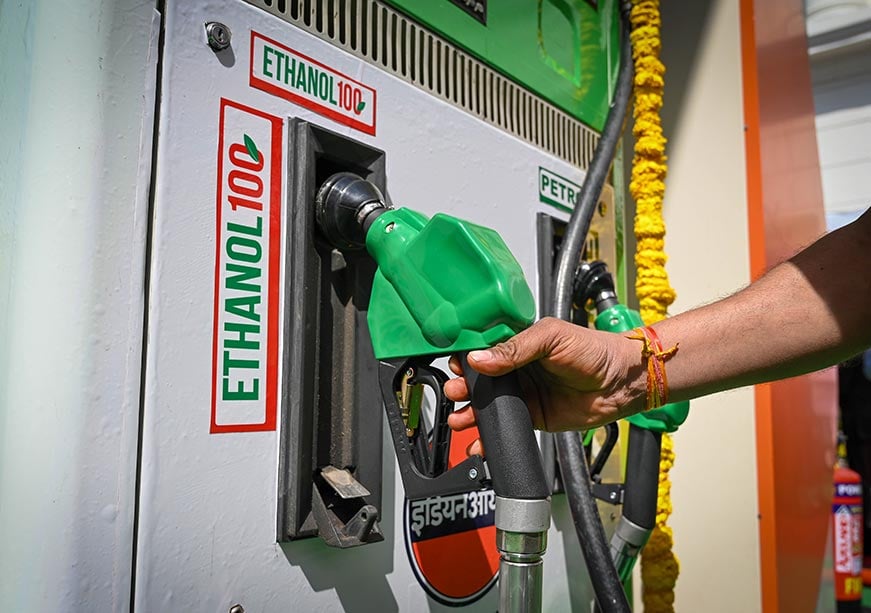
THIRUVANANTHAPURAM — Following allegations in neighbouring Karnataka regarding petrol being blended with ethanol beyond prescribed limits, the Keralam government has decided to conduct quality tests on motor fuel sold across the state. The Congress-led UDF government has directed the Department of Civil Supplies and Consumer Affairs to collect petrol samples and send them for laboratory analysis to determine whether ethanol content exceeds the mandated 20 percent threshold. Fuel samples will be drawn from retail outlets across Thiruvananthapuram, Ernakulam, Kozhikode, and Kannur districts on the instructions of Minister for Civil Supplies and Consumer Affairs Anoop Jacob, issued after consultations with Chief Minister V.D. Satheesan.
Precautionary Checks Initiated Across Four Key Districts
A statement issued by the minister’s office clarified that the state administration has not received any formal complaints or instances indicating excess ethanol blending in petrol supplies within Keralam. Nevertheless, the government opted to initiate testing as a precautionary measure in response to the allegations raised in Karnataka. Under existing departmental frameworks, designated officials ranging from the Civil Supplies Commissioner to taluk-level supply officers possess statutory powers to inspect filling stations and draw fuel samples.
The government emphasized that stringent legal proceedings will be launched against any parties found guilty of fuel adulteration or violating prescribed blending limits. Authorities confirmed that any irregularities concerning petroleum quality standards would be handled with utmost administrative seriousness. The laboratory test reports from the four designated districts are expected to verify whether retail fuel adheres strictly to certified distribution parameters or diverges from regulatory norms.
Inter-State Fuel Blending Dispute and Divergent Test Findings
The inspection drive in Keralam unfolds amid an escalating dispute in Karnataka, where the state government alleged that state-run oil marketing companies were retailing petrol containing ethanol concentrations significantly above the statutory 20 percent cap. According to Karnataka Food, Civil Supplies and Consumer Affairs Minister Rizwan Arshad, local authorities collected 63 fuel samples across seven districts, selecting 14 for detailed laboratory evaluations. The minister stated that 11 of the tested samples breached the maximum limit, with one sample registering an ethanol concentration of 31.2 percent.
State-owned oil marketing companies have contested these claims, questioning the sampling protocols and laboratory testing methodologies adopted by Karnataka authorities. The Union Ministry of Petroleum and Natural Gas also disputed the state government’s findings, citing its own testing evaluations to affirm that distributed fuel supplies complied with prescribed national specifications. The contrasting claims have intensified public debate regarding monitoring practices and oversight mechanisms governing fuel retail infrastructure.
Regulatory Context and Operational Concerns Surrounding E20 Fuel
Under the nationwide ethanol blending program initiated in phased rollouts from April 2023, E20 fuel comprises a blend of 20 percent agricultural ethanol—primarily distilled from sugarcane and maize—and 80 percent conventional fossil petrol. The national initiative aims to curb reliance on imported crude oil, conserve foreign exchange reserves, and reduce vehicular carbon emissions. However, the wider availability of E20 fuel has generated debate regarding its mechanical compatibility with older motor vehicles not originally engineered to support higher alcohol ratios.
Motoring groups and critics have expressed apprehension that prolonged use of fuel containing 20 percent ethanol could adversely affect internal fuel components, rubber seals, and related engine systems in incompatible vehicles. Questions have also been raised regarding economic effects on consumers and broad fuel consistency across supply networks. With official laboratory findings pending in Keralam, the upcoming chemical evaluations from Thiruvananthapuram, Ernakulam, Kozhikode, and Kannur will determine whether fuel dispensed in the state adheres strictly to national E20 standards or requires further statutory intervention.