
Follow us on Google News

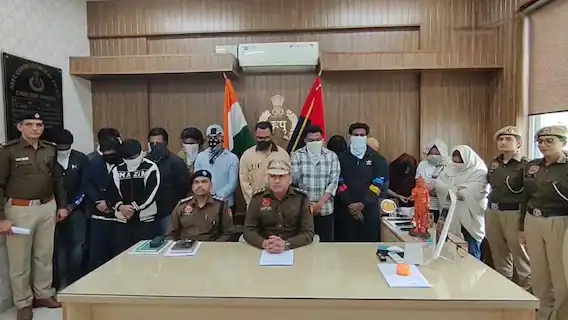
Interpol has carried out a major coordinated crackdown across 65 countries against organized syndicates involved in the international trafficking of stolen vehicles. Under Operation Carback-2, law enforcement agencies arrested 688 suspects and seized 2,394 stolen cars. Authorities also recovered 1,891 vehicle parts alongside narcotics, weapons, and cash during the raids. Investigating agencies exposed 30 organized criminal syndicates operating across borders. The coordinated effort focused on identifying stolen vehicles, mapping smuggling routes, and dismantling networks linked to the illicit trade. Investigations revealed that these criminal groups do not merely steal cars for resale, but also use the stolen vehicles to smuggle drugs and weapons.
Twelve-Day Operation Across 65 Countries
The operation was conducted from September 28 to October 9 in collaboration with the European border security agency Frontex. During this 12-day period, investigative and law enforcement agencies from 65 countries worked together to identify suspicious vehicles, verify travel and ownership documents, and trace criminal networks. Alongside routine vehicle inspections, authorities intensified surveillance at border crossings, seaports, and major transit corridors.
The primary objective of the campaign was to prevent stolen vehicles from reaching international markets and to identify syndicates that steal cars in one country for sale or use in another. Information sharing between agencies across participating nations uncovered numerous cases where thieves attempted to disguise the identities of stolen cars after smuggling them across international borders.
Interpol Database Searched Over 1.5 Million Times
To identify suspect vehicles and individuals during the crackdown, enforcement agencies searched the Interpol database more than 1.5 million times. These checks yielded suspicious records in 1,180 cases. Additionally, authorities cross-referenced the registration numbers of more than 480,000 vehicles against stolen vehicle databases. This extensive verification process helped confirm the true identities of vehicles located in foreign jurisdictions and established whether they had been reported stolen.
In several instances, investigators found discrepancies between a vehicle’s registration numbers and its accompanying documents. Agencies followed up on these suspicious records to track down and confiscate the vehicles. The widespread use of the database enabled officers to detect cars being driven in other countries under forged documents or altered registration plates.
GPS Tracking Aids Recoveries Across Continents
The operation highlighted how stolen vehicles are routinely moved thousands of kilometers away from where they were taken. A Toyota car stolen in France was recovered in Mauritania, while two vehicles stolen in Portugal were intercepted in Senegal and Nigeria. In South America, a car stolen in Argentina was traced to Bolivia with the help of GPS tracking technology. These recoveries demonstrated that syndicates rely on established international networks to transport vehicles across continents, while technical records and GPS data proved vital for agencies in pinpointing their exact locations.
At the Tangier port in Morocco, authorities seized two luxury cars that had been stolen in Canada after matching them with stolen vehicle records. Meanwhile, in Greece, officers intercepted three cars bearing French registration plates. Further investigation revealed that their documents were forged. The vehicles had originally been rented and were being driven out of the European Union. This discovery highlighted concerns regarding the misuse of car rental companies and cross-border transport systems, prompting agencies to focus closely on verifying ownership documents.
The findings from Operation Carback-2 indicate that vehicle theft is closely tied to broader transnational organized crime. Syndicates routinely dismantle stolen cars for parts, alter their identities with fake paperwork, or deploy them in drug and arms trafficking. With 30 syndicates exposed, international law enforcement agencies now face the ongoing task of identifying the financial networks, smuggling routes, and associates behind these groups to dismantle their operations entirely.