
Follow us on Google News

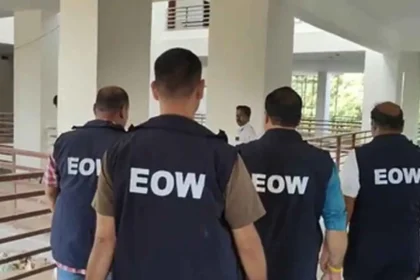
The Directorate of Enforcement conducted search operations under Section 37 of the Foreign Exchange Management Act at three premises in Bengaluru linked to cryptocurrency exchanges CoinDCX and Delta Exchange. The searches, carried out on November 4 and 5, followed intelligence indicating large-scale violations of foreign exchange regulations and unauthorised cross-border financial transactions involving derivative crypto trading and Real World Asset tokens. The platforms are operated by Neblio Technologies Private Limited and Excelium Technologies Private Limited respectively. Investigators found that both entities were offering spot trading, crypto futures and options, and trading in tokenised stocks of foreign companies, actively advertising these products without holding the requisite regulatory authorisations.
Cross-border routing through shell entities and stablecoins
Discreet enquiries and intelligence gathered by the federal agency revealed that user funds collected in Indian rupees were systematically converted into the stablecoin USDT to execute transactions on foreign-based crypto exchanges including Binance, KuCoin, Gate.io, and Bybit. To facilitate spot trading, client orders placed on the domestic platform were converted into USDT and routed abroad. Evidence gathered during the searches showed that these transfers bypassed the established framework for cross-border remittances by using accounts opened under the name of a Costa Rica-based paper entity. Actual operations were executed directly from CoinDCX through Application Programme Interfaces, with cross-border spot trading transaction volumes running into thousands of crores of rupees.
Mirror positions and synthetic exposure to overseas equities
A similar mechanism was identified in derivative contracts, where domestic users placed orders for futures and options. CoinDCX allegedly mirrored these orders on a one-to-one basis by opening corresponding positions on overseas exchanges using accounts held by the Costa Rican paper firm. When domestic users closed their positions, financial settlements were completed directly on the overseas platforms. In addition, the agency detected transactions involving tokenised stocks of foreign corporations such as Apple, Google, and Tesla. These trades were offered as synthetic derivatives rather than underlying equity ownership, with client funds converted into USDT to establish matching derivative positions on Hyperliquid, a foreign-based decentralised platform, generating thousands of crores of rupees in cross-border volume.
Enterprise accounts and regulatory scrutiny across statutes
Search proceedings further established that CoinDCX maintained enterprise trading accounts on overseas crypto platforms, holding crypto assets in direct contravention of the provisions of the Foreign Exchange Management Act. The company also paid hundreds of crores of rupees as transaction fees to these overseas platforms, settling operational business expenses in USDT rather than through legitimate banking channels. In the case of Delta Exchange India, a large volume of its derivative contracts and tokenised stock trades were routed directly through CoinDCX before execution on foreign platforms. The agency also noted that Delta Exchange India transferred hundreds of crores of rupees to foreign associate entities. The products offered by both platforms prima facie contravene regulatory provisions under the Securities Contracts Regulation Act of 1956, the SEBI Act of 1992, and the RBI Act of 1934, with further investigation currently in progress.