
Follow us on Google News

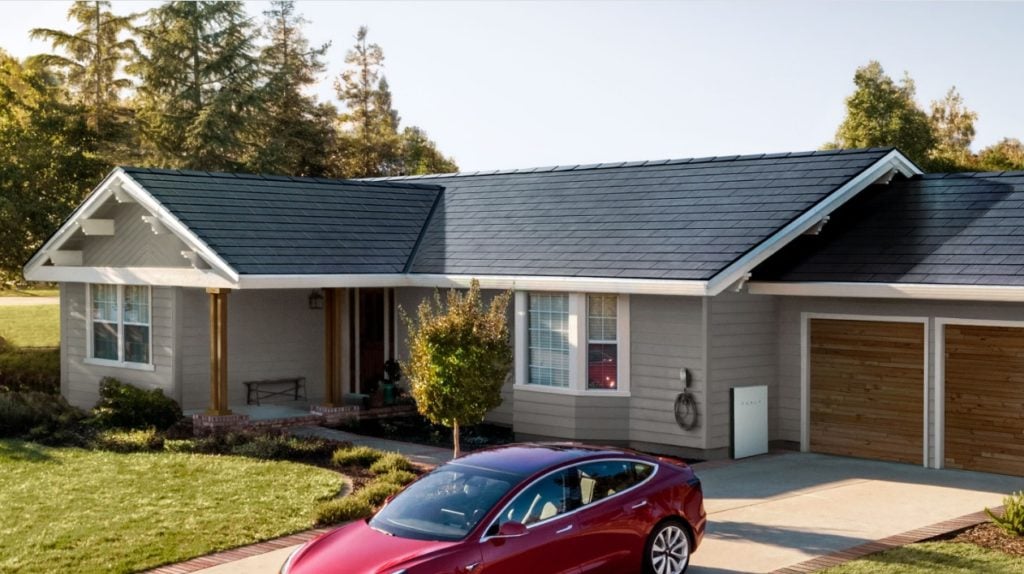
Tesla has suffered a significant legal setback in California after a state court held the clean energy giant liable for fraud and negligent misrepresentation over a botch-ridden residential solar roof installation. The ruling, handed down by San Diego Superior Court Judge Cynthia Freeland, stems from a dispute involving a project that ballooned from an initial estimate of Rs 77.14 lakh to nearly Rs 1.03 crore without ever delivering a single unit of electricity. The homeowner now estimates that remedying the structural fallout and completely replacing the compromised roof could cost upwards of Rs 23.45 crore.
San Diego County resident Ambrose Conroy of Rancho Santa Fe entered into a contract with Tesla in March 2020. The scope of work underwent two substantial modifications by February 2021, elevating the contract price to Rs 1.03 crore to accommodate an 18.2-kilowatt solar roof system backed by six Powerwall batteries. Despite the escalated commitment, the installation failed local authority inspections, left the system completely inoperative, and inflicted extensive physical damage across the estate. A subsequent settlement offer from Tesla in April 2022 of roughly Rs 4.69 lakh was rejected by the owner, initiating a prolonged legal battle.
Repeated procedural lapses and severe court sanctions
The lawsuit, titled Conroy v. Tesla, was filed in 2022 in the North County branch of the San Diego Superior Court, where the defense faced persistent reprimands for withholding critical case documentation. During proceedings, Judge Freeland levied monetary penalties against Tesla on two separate occasions, including an order to pay Rs 14.52 lakh in February 2026 followed by another sanction of Rs 12.66 lakh in June. The court issued firm warnings that continued noncompliance with discovery directives would trigger decisive legal consequences against the company.
Following continued defaults, the judge entered default rulings against Tesla on September 11 regarding claims of fraud and negligent misrepresentation. A reconsideration petition filed by the automaker was formally denied on October 27, with the court noting that belatedly produced internal records supported claims that Tesla treated the private residence as a trial ground without adequate field proficiency. The withheld materials spanned internal Microsoft Teams communications, workplace safety documents, county inspection emails, and more than twenty specialized installation and safety logs.
Internal communications reveal project treated as experiment
The litigation exposed private communications among senior engineering executives, including text exchanges dating back to January 13, 2021, involving Model Engineering Director Bobby Yang. The plaintiff submitted these exchanges to demonstrate that crew members treated the complex site as an unverified trial. In a February 2021 email, Yang described the structural complexity of the home as ranking within the 99.5th percentile, while former energy head RJ Johnson acknowledged the operational risk to company metrics. Daily briefings on the site were routinely forwarded to Chief Executive Elon Musk, whom Conroy’s legal team has added to their witness list.
Physical execution on site diverged sharply from original contractual assurances. While the removal of the original roof was scheduled for completion within two days, the process stretched across two weeks, exposing underlying timbers to the elements. Crew members allegedly affixed cracked and scarred tiles, leaving broken glass debris across driveways and lawns that compromised safety. A municipal inspection in February 2025 faltered when workers failed to submit necessary ventilation designs, and an independent electrical specialist flagged improper conduit arrangements as severe fire hazards during rainstorms. Conroy is now in the process of dismantling the entire solar structure.
Corporate appeal seeks relief as damages trial nears
Tesla moved the court on October 29 to halt pending proceedings, petitioning the California Court of Appeal on grounds that the discovery sanctions were overly punitive and infringed upon its due process rights. While the company conceded liability on counts of breach of contract, breach of warranty, and basic negligence, it continues to vigorously contest the claims involving deliberate deceit and intentional misrepresentation.
Judicial determination of general and punitive damages remains outstanding as the court vacates a previously scheduled November 20 hearing to accommodate a trial readiness conference on December 4. The unfolding controversy places renewed scrutiny on the commercial viability and operational deployment of the Solar Roof line, originally introduced by Musk in 2016 as an aesthetic, premium alternative to conventional solar panels.