
Follow us on Google News

Chandigarh: The Indian Army has initiated summary court martial proceedings against a havildar clerk posted in Binnaguri, West Bengal, over his alleged role in fraudulently sanctioning allowances worth ₹5.58 crore using forged service records and fabricated official orders. The non-commissioned officer, stationed with the 20 Mountain Artillery Brigade Camp, faces around a dozen serious charges including forgery, falsification of commanding officers’ signatures, and unauthorised access to official digital systems. Military investigators allege that the clerk systematically generated illicit financial entitlements in the names of soldiers between December 2019 and September 2022, pocketing approximately ₹1.73 crore as illegal commission from the recipients in exchange for his services.
Audit Objections Uncover Manipulation Across 218 Official Orders
The financial irregularity surfaced in 2022 when the Principal Controller of Defence Accounts raised audit objections regarding an unusual delay in the publication of Part-II orders. Subsequent internal inquiries conducted by the 20 Mountain Artillery Brigade Camp uncovered extensive manipulation spanning 218 individual military orders. The documentation revealed that the clerk had fabricated 75 orders relating to temporary duty, 43 orders concerning children’s education allowances, 51 orders for hostel subsidies, and 49 orders pertaining to house rent allowances.
These fraudulent entries served as the formal administrative basis to transfer government funds directly into the bank accounts of various army personnel. The hostel subsidy allowance, intended to assist soldiers in meeting boarding and lodging expenses for children attending residential schools, was among the most heavily exploited mechanisms. The scale of the discrepancy prompted defence accountants to scrutinise multiple historical transactions tied to the brigade camp, exposing systemic procedural subversion within the unit’s administrative registry.
Abnormal Account Inflow Leads to Confession and Detailed Inquiry
The scheme began unravelling when defense accounts officials flagged an abnormally high sum credited to the personal bank account of a soldier, alongside delayed documentation. A formal show-cause notice was subsequently served on the jawan to explain the irregular transactions. Records indicated that the soldier had received inflated education and hostel allowances for the period between April 2, 2019, and March 31, 2022, despite his children attending lower kindergarten, class one, and class two during that timeframe.
Confronted with the audit findings, the soldier admitted to submitting fraudulent allowance claims. He disclosed to authorities that the havildar clerk had engineered the falsified Part-II orders in return for substantial commission payments deducted from the disbursed amounts. The admission provided the evidence required for the military establishment to order a comprehensive Court of Inquiry into the wider operation, ultimately implicating the clerk in widespread document forgery and unauthorised use of official stamps.
Tribunal Rejects Plea to Halt Court Martial on Limitation Grounds
Formal military charges against the clerk cite the publication of bogus Part-II orders for financial kickbacks, forging the camp commandant’s signatures, and operating the commandant’s digital Human Resource Management System token without lawful authorisation. Investigators also determined that forged rubber stamps of school administrations were used to give the fake reimbursement claims an appearance of authenticity before submitting them for accounting clearance.
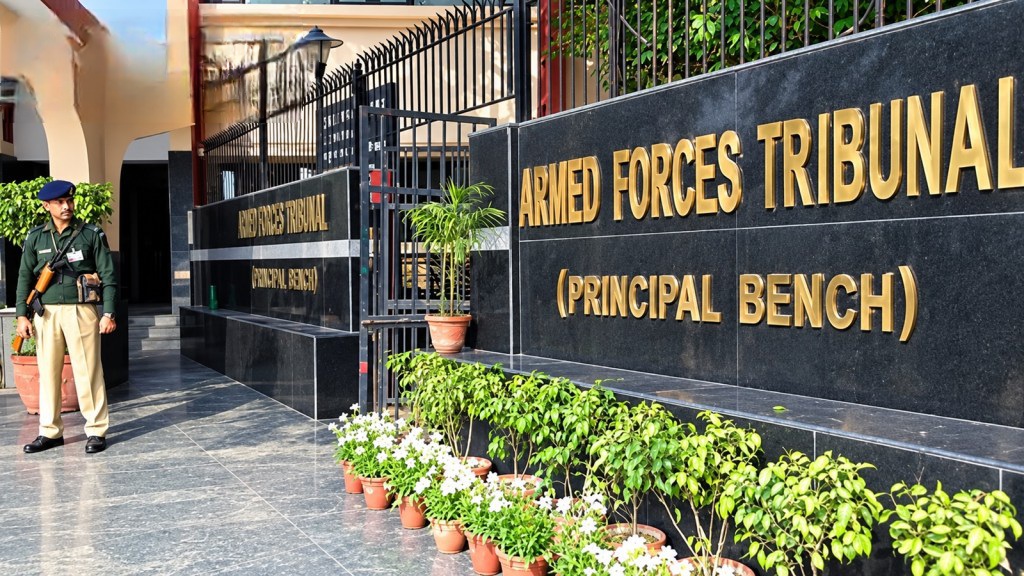
The accused soldier approached the Armed Forces Tribunal seeking to stall the summary court martial, contending that the legal action was barred under the limitation periods prescribed by Section 122 of the Army Act, 1950. In June 2026, the tribunal disposed of the petition without staying the court martial, observing that the accused could raise his statutory limitation arguments during the formal trial in accordance with procedures laid down under the Army Rules, 1954. The ruling has cleared the way for the military judicial proceedings to conclude and determine final liability.