

Police in Bihar’s Muzaffarpur have arrested a man accused of using the promise of government-backed mushroom farming projects to allegedly cheat beneficiaries of crores of rupees.
The arrested accused has been identified as Ashutosh Mangalam. Police say cases registered across three police station areas have so far produced allegations involving around ₹2.67 crore, while another part of the investigation concerns loans worth approximately ₹3.63 crore allegedly obtained in the names of 110 women associated with Jeevika.
Mangalam’s sister has also been named as an accused and remains absconding. Police are conducting raids to locate her while examining company accounts, loan documents and transactions linked to the alleged operation.
Proposal for Conducting Cyber Crisis Drill, Tabletop Exercise (TTEx) & CCMP Readiness Exercise
Government scheme promise allegedly became the entry point
According to Muzaffarpur Rural SP Rajesh Singh Prabhakar, Mangalam allegedly operated through an organisation and company that approached people with promises of employment and self-employment under government schemes.
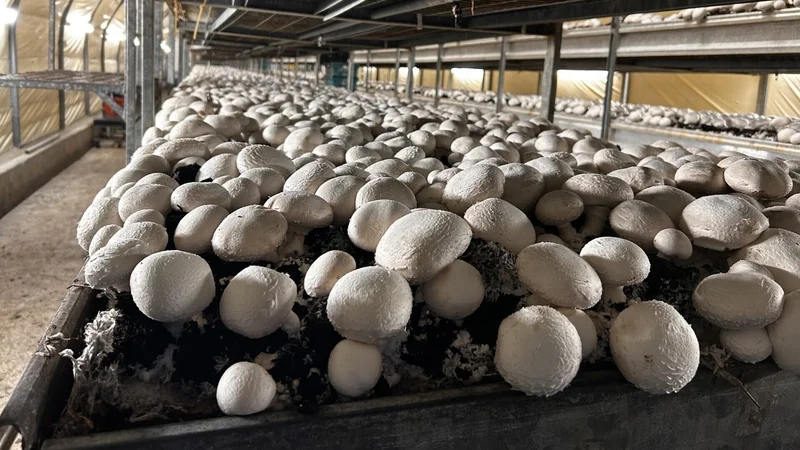
The proposal centred on mushroom production. Beneficiaries were allegedly promised mushroom units, “smart huts”, technical support and other infrastructure, along with help in obtaining bank loans.
Police allege that once loans were sanctioned in the beneficiaries’ names, the money was transferred into accounts controlled by the company or organisation instead of being used to provide the promised facilities.
The projects were allegedly not completed as promised. When some beneficiaries demanded their money back, they were reportedly issued cheques that later bounced.
Police say cases connected to the alleged scheme have been registered at Saraiya, Bochahan and Mushahari police stations.
Aaj Tak reports approximately ₹21 lakh in Saraiya police station case number 52/26, around ₹1.18 crore in Bochahan case number 225/25 and about ₹72 lakh in Mushahari case number 219/25. Police have put the wider alleged fraud figure at roughly ₹2.67 crore.
Investigators are now examining how many beneficiaries were recruited and how much money was sanctioned in their names.
110 Jeevika women allegedly left carrying ₹3.63 crore in loans
The investigation has uncovered another, potentially larger, financial problem.
Police say the accused’s agency is suspected of arranging loans totalling approximately ₹3.63 crore in the names of 110 Jeevika women. Individual loans were allegedly as high as around ₹3.30 lakh.
The women claim they did not receive the expected benefit from the projects despite having loans registered in their names.
Repayments were allegedly not made, meaning interest continued to accumulate. Several affected women are now seeking both police action and relief from debts they say arose from the alleged scheme.
The dispute has also reached the court of the Sub-Divisional Magistrate, East. Aaj Tak reports that the matter is scheduled for its next hearing on September 16.
Police say Jeevika-linked individuals and social media were allegedly used to reach potential beneficiaries.
The investigation has also found complaints against Mangalam in Sitamarhi and Gopalganj, which police are examining to determine whether the alleged operation extended beyond Muzaffarpur.
Bihar really does subsidise mushroom farming — but through official channels
The case could easily create confusion because Bihar does operate genuine government programmes promoting mushroom farming.
Under an official horticulture programme covering Muzaffarpur and 27 other districts, a low-cost mushroom production unit carries an approved cost of ₹2 lakh. The government provides a 50% subsidy, or ₹1 lakh, subject to prescribed conditions.
Applicants must be registered on the state’s DBT portal, undergo at least two days of training and receive inspection and recommendation from the Block Horticulture Officer before subsidy is released. One beneficiary can receive assistance for up to five such units.
Bihar also offers other mushroom-related assistance. The state’s horticulture department lists 90% subsidy on certain mushroom kits and 50% assistance for approved mushroom huts.
This makes an important distinction in the Muzaffarpur case.
There is no evidence in the material reviewed by The420.in that Bihar’s official mushroom subsidy programme itself is fraudulent. The police allegation is that government schemes and the promise of official benefits were allegedly invoked to persuade beneficiaries to take loans that were then diverted.
That difference will now become central to the investigation.
Police are tracing where the loan proceeds went, which company accounts received them, what infrastructure was actually created and whether other people helped arrange beneficiaries or bank financing.
Investigators are also questioning Mangalam to identify others who may have participated in the alleged network.
What this means for you: Before taking a loan for any government-linked livelihood scheme, verify the programme directly on the department’s official website or with the local government office. A subsidy promise should not require you to surrender control of loan proceeds to an unknown private agency without clear official documentation.
The420 Insight: The danger in such alleged schemes is the use of a genuine government programme to create credibility. When the loan is in the beneficiary’s name but the money moves elsewhere, the victim can lose twice — first through the suspected diversion and then through years of debt and interest.
Follow for daily updates on cybercrime, corporate fraud, DFIR, hacking, investigations, and digital forensics
