

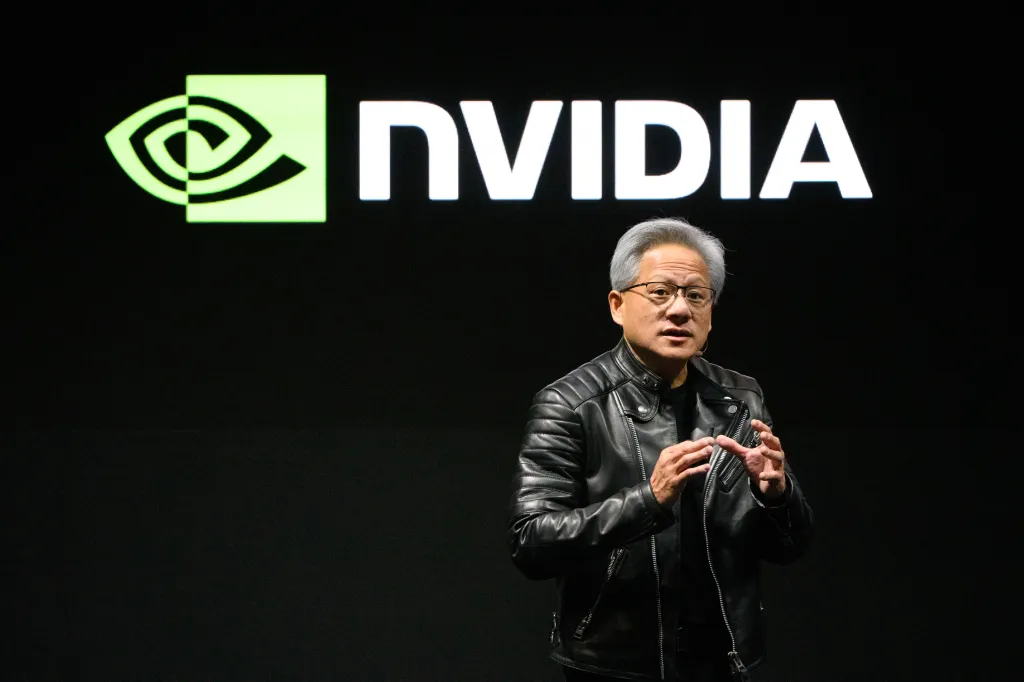

Nvidia Chief Executive Jensen Huang has delivered a direct message to India: the country has the talent, software industry and market size needed to become a major artificial intelligence power, but it cannot afford to move slowly.
Speaking at the G20 Innovation Ministerial in the United States, Huang described India as one of the world’s leading information technology powers and urged Indian companies and start-ups to build a stronger domestic AI economy rather than simply consume technology developed elsewhere.
His argument is simple. India spent decades building a globally competitive IT services industry. The next challenge is to convert that software base into AI products, models, infrastructure and businesses that create value inside the country.
“Move faster” was the central message.
But speed alone will not decide whether India succeeds. AI increasingly depends on access to expensive computing infrastructure, specialised chips, large datasets and enough electricity to keep massive data centres running.
Algoritha Security Launches ‘Make in India’ Cyber Lab for Educational Institutions
India Has the Talent, but AI Needs Much More Than Software Engineers
India’s advantage is obvious.
The country has one of the world’s largest pools of software engineers, a large digital economy and millions of businesses that could potentially adopt AI tools.
Huang believes those strengths give India a rare opportunity to build its own AI economy.
The difficulty is that the AI industry works differently from the traditional outsourcing model that helped make India an IT powerhouse.
A software services company can often begin with skilled engineers and relatively modest infrastructure. Building advanced AI systems requires far more computing power.
Training and running modern AI models requires thousands of specialised processors working together inside large data centres. Nvidia is the dominant supplier of many of these processors.
That means India’s AI ambitions increasingly depend on building physical infrastructure as much as developing software.
What Are GPUs, Compute and AI Factories?
A GPU, or graphics processing unit, is a specialised computer chip capable of performing huge numbers of calculations at the same time.
These chips were originally designed largely for computer graphics and gaming. Their ability to perform parallel calculations made them extremely useful for training artificial intelligence models.
Compute simply refers to the processing power available to run these calculations.
Think of AI development like manufacturing. Data is the raw material, algorithms are the design, and computing power is the machinery required to produce the final product.
Huang often describes large AI-focused data centres as AI factories.
Unlike an ordinary data centre that mainly stores websites, emails or company databases, an AI factory contains powerful chips designed to train models and generate AI outputs at enormous scale.
Nvidia said in 2024 that Indian infrastructure providers including Yotta Data Services, Tata Communications, E2E Networks and Netweb were rapidly increasing AI computing capacity in the country.
Government Is Already Building a National Compute Pool
India has recognised that access to expensive chips can become a barrier for smaller companies and researchers.
Under the ₹10,372-crore IndiaAI Mission, the Union Government is creating a shared computing system where start-ups, researchers, academic institutions and government organisations can access high-end AI infrastructure without purchasing entire clusters themselves.
By March 2026, more than 38,000 GPUs had been onboarded under the IndiaAI compute programme.
The Government later announced plans to add another 20,000 GPUs, taking the planned shared pool substantially higher.
Data centres providing these resources are spread across locations including Mumbai, Navi Mumbai, Hyderabad, Bengaluru, Noida and Jamnagar.
India has also started backing domestic foundation models. Teams including Sarvam AI and BharatGen are among those developing models designed for Indian languages and local use cases.
That is important because relying entirely on foreign models can create concerns around cost, language coverage, sensitive data and technological dependence.
Reliance and Tata Have Already Made Big AI Infrastructure Moves
Huang’s push for India to move faster is not entirely theoretical.
Nvidia has already entered major partnerships with Indian companies.
In 2023, Nvidia and Reliance announced plans to build AI computing infrastructure in India and develop language models designed for the country’s diverse linguistic market. Reliance said the underlying data centre infrastructure could eventually expand to 2,000 MW.
Nvidia also partnered with Tata Group to build large-scale AI infrastructure, including a supercomputer and AI cloud services intended for companies, researchers and start-ups.
These projects show that India’s AI build-out has already begun.
The question is whether development can happen quickly enough.
China and the United States are investing heavily in chips, data centres, foundation models and AI research. Once ecosystems of developers, customers and infrastructure become deeply established, catching up becomes more difficult.
Huang Also Warns Against Heavy-Handed AI Regulation
Huang’s message was not limited to infrastructure.
He also argued that governments should regulate AI based on actual harm rather than placing broad restrictions on the technology itself.
That debate matters for India.
Weak regulation could expose citizens to deepfakes, fraud, privacy violations and unsafe automated systems. Excessively restrictive rules, however, could make it harder for smaller Indian companies to experiment and compete with large global firms.
India therefore faces two races at the same time.
One is to build enough computing capacity, models and companies to remain competitive.
The other is to create rules that protect citizens without slowing domestic innovation so much that India becomes merely a customer of foreign AI systems.
Huang’s warning ultimately reflects that tension.
India already has the engineers and the digital market. What it needs now is enough computing infrastructure, capital and speed to turn those advantages into an AI industry of its own.
What this means for you: AI skills alone may not define the next technology boom. For students, start-ups and professionals, understanding AI tools, data and computing infrastructure could become increasingly important as India moves from using AI to building it.
https://www.linkedin.com/company/policetechnology/home/
