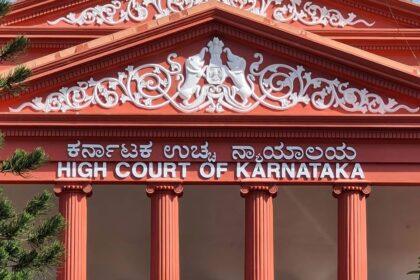

The Rajasthan High Court has acquitted 11 people, including a death-row convict, in the 2019 double murder of a man and a woman in Sikar after finding serious shortcomings in the prosecution’s evidence.
The court held that investigators had failed to establish an unbroken chain of circumstantial evidence and directed the state police to introduce standard procedures for collecting and preserving digital evidence.
What Did the High Court Decide?
A division bench comprising Justices Mahendra Kumar Goyal and Bhuwan Goyal delivered the judgment on October 30, 2026, while hearing a death reference and connected appeals.
The trial court had earlier sentenced one accused to death, imprisoned nine others and convicted another person for destroying evidence in its November 30, 2024 judgment.
https://the420.in/fcrf-certified-chief-ai-officer-second-cohort-november-2026/
The High Court overturned the convictions and sentences, finding that the prosecution had failed to establish circumstances conclusively pointing towards the guilt of the accused.
Why Did the Electronic Evidence Raise Concerns?
The defence questioned the reliability of CCTV recordings, citing delays in seizing digital video recorders, improper sealing and gaps in the chain of custody.
Concerns were also raised over the absence of forensic examinations and deficiencies in certificates supporting electronic records.
The bench criticised shortcomings in the investigation and observed that investigating and supervising officers were often unaware of the procedures governing electronic evidence.
What Directions Did the Court Issue?
The High Court directed Rajasthan’s Director General of Police to prepare a standard operating procedure within two months for collecting, seizing, preserving and proving electronic evidence.
The proposed guidelines must address timely preservation of CCTV footage, seizure of original storage devices, preparation of forensic copies with recorded hash values and discrepancies in device timestamps.
The court also called for proper procedures to obtain call detail records and subscriber information. Mandatory training was ordered for investigating officers, supervisory officials and public prosecutors. A compliance report must be submitted within three months.
How Did the Murder Case Begin?
The case dates to October 21, 2019, when Ganpat Lal was allegedly called to a petrol pump near the Palsana bypass around 11.16 pm.
He was reportedly assaulted by a group of men and taken away in a passenger vehicle. His brother, Baldev Godara, filed a complaint at Ranoli police station on October 23, following which an FIR was registered.
The420 Insight: Why Does This Ruling Matter?
The judgment highlights the importance of properly preserving and authenticating electronic evidence in criminal investigations. Failures in documenting CCTV footage, digital records and their handling can seriously weaken a prosecution, even in cases involving grave offences.