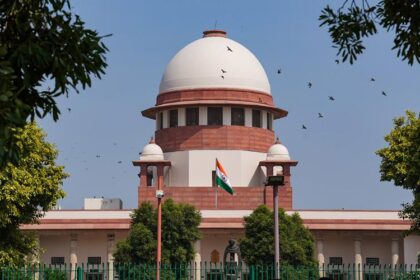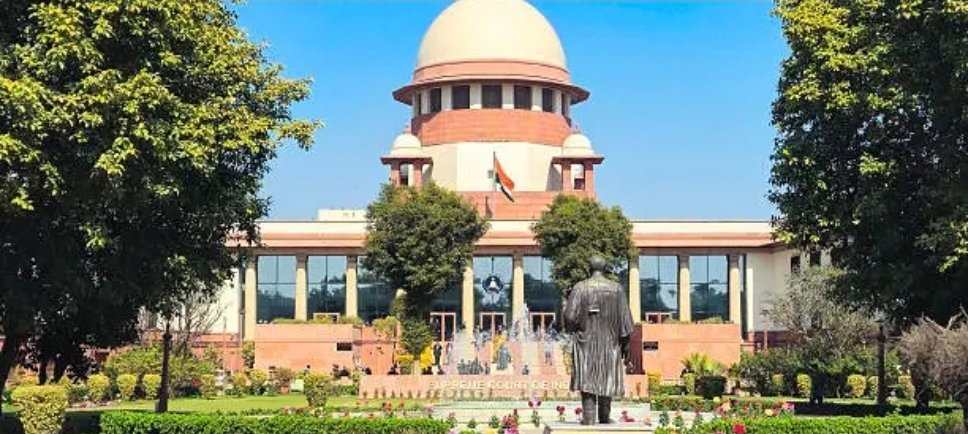

The Supreme Court has directed MeitY to ensure compliance with restrictions on unauthorised use of court proceeding recordings.
What Has the Supreme Court Directed?
The Supreme Court has directed the Ministry of Electronics and Information Technology (MeitY) to ensure compliance with its interim directions restricting unauthorised extraction, modification and circulation of judicial audio-video recordings on digital platforms.
A bench comprising Chief Justice Surya Kant, Justice Joymalya Bagchi and Justice V Mohana also directed that appropriate measures against violations be incorporated into the proposed policy framework.
The directions came during the hearing of a Public Interest Litigation seeking safeguards against unauthorised livestreaming and redistribution of court proceedings. The bench noted that suggestions from High Courts and interim directions were being considered while formulating the policy.
https://the420.in/fcrf-certified-chief-ai-officer-second-cohort-november-2026/
What Restrictions Already Apply?
On July 24, 2026, the Supreme Court prohibited the extraction, modification, dissemination, monetisation, reposting or uploading of judicial audio-video recordings on social media and digital platforms without prior permission from the Supreme Court’s Secretary General or the concerned High Court’s Registrar General.
The court subsequently clarified on August 5 that its directions should not be interpreted as a blanket prohibition on reporting court proceedings by recognised news organisations.
During the latest hearing, Chief Justice Kant referred to restrictions on commercial exploitation of judicial recordings. Justice Bagchi highlighted the difficulty of preventing individuals from recording portions of official livestreams and subsequently circulating edited extracts.
The discussion distinguished between legitimate reporting of judicial proceedings and unauthorised reproduction or manipulation of recordings.
What Technological Safeguards Were Proposed?
Advocate Prashant Bhushan suggested using digital watermarking and cryptographic signatures to authenticate official recordings. Under his proposal, authorised court footage could carry verifiable digital identifiers, allowing viewers and online platforms to distinguish genuine recordings from manipulated versions.
Bhushan also suggested maintaining authenticated recordings on official court websites. The bench discussed practical difficulties in preventing unauthorised extraction, even when recordings originate from verified court channels.
Solicitor General Tushar Mehta informed the court that suggestions from High Courts and legal professionals had been received and forwarded for consideration. He indicated that a proposal could be placed on record within a week. Senior Advocate Mukul Rohatgi and Advocate Prashant Bhushan appeared for the petitioner, while Mehta represented the Union government.
What Happens Next in the Case?
The Supreme Court has asked MeitY to ensure that the interim restrictions are reflected in the developing regulatory framework, including provisions addressing non-compliance.
The court had earlier sought a proposal from the Union government in consultation with the concerned ministries. High Courts were also directed to submit status reports concerning their adoption of the Model Rules for Live Streaming and Recording of Court Proceedings. The proceedings also referred to action taken by the Kerala High Court over alleged unauthorised recording and broadcasting of judicial proceedings on social media.
The matter, titled Harshita Grover v. Union of India and Others, remains pending before the Supreme Court and has been listed for further hearing.
The case raises questions about protecting the authenticity of judicial recordings while preserving legitimate access to court proceedings and the ability of recognised news organisations to report on them.