
Stay ahead with our breaking stories and exclusive coverage prioritized on Google.
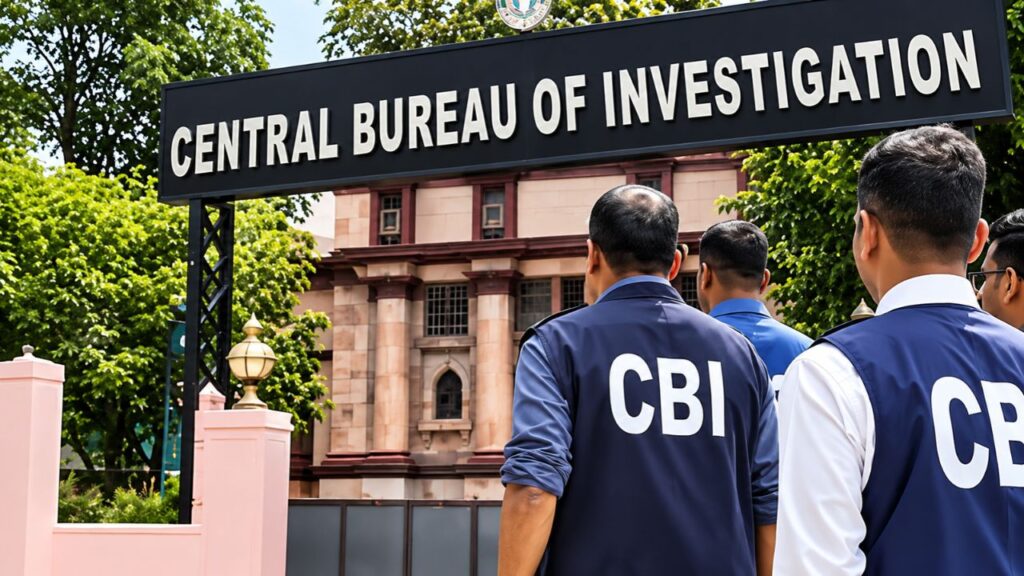
Add The420 on Google →Hyderabad. The Telangana High Court has raised serious questions regarding a loan of approximately Rs 500 crore sanctioned by the State Bank of India (SBI) to SemIndia Fab Private Limited, and has impleaded the Central Bureau of Investigation (CBI), Hyderabad, in the judicial proceedings. The court took this step after it emerged during the hearing that the state government had already resumed 78 acres out of the 100 acres of land allotted to the company in February 2010, nearly a year before SBI sanctioned the massive loan in 2011. Justice Nagesh Bheemapaka directed the court registry to provide all case-related documents to the standing counsel for the CBI to seek the investigating agency’s assistance.
The dispute pertains to land allotment and loan recovery in the Fab City Special Economic Zone (SEZ) located at Raviryal village in Rangareddy district. SBI had approached the High Court seeking a stay on the state government’s land resumption proceedings. The bank contended that it had extended a loan of nearly Rs 500 crore to the company against a mortgage created on the allotted land, and sought protection for recovery actions initiated under the Securitisation and Reconstruction of Financial Assets and Enforcement of Security Interest (SARFAESI) Act.
100 Acres Allotted on Lease for Semiconductor Plant
The background of the case dates back to 2006, when the erstwhile undivided Andhra Pradesh government signed a Memorandum of Understanding (MoU) with SemIndia Fab Private Limited. The company had proposed setting up a semiconductor manufacturing unit at Fab City in Hyderabad with a planned investment of around 2.25 billion dollars, or more than Rs 18,000 crore.
Subsequently, in 2007, the government allotted 100 acres of land in Raviryal of Maheshwaram mandal to the company on a 66-year lease to establish an assembling, testing, marketing, and packaging (ATMP) plant. In 2009, the government also issued No Objection Certificates (NOCs) permitting the company to mortgage its leasehold rights. However, citing a failure to fulfill investment commitments and lack of adequate progress, the government took back 78 acres of land in February 2010, allowing the firm to retain the remaining 22 acres under revised conditions.
Loan Sanctioned Despite Land Resumption and Lack of Progress
The High Court anchored its scrutiny of SBI’s lending decision on this timeline. The court questioned the basis on which the bank approved a loan of around Rs 500 crore in 2011 when the majority of the land had already been reclaimed by the government in February 2010. Justice Bheemapaka observed that it was the legal responsibility of the bank to properly assess the company’s income and repayment capacity before sanctioning such a substantial sum.
During the proceedings, the court also questioned the actual progress on the ground. Records indicated that no concrete work had taken place on the proposed semiconductor project and only an incomplete structure or shed existed at the site. Calling the failure to ensure adequate safeguards before lending a serious and deplorable lapse, the judge noted that the bank had failed to produce sufficient documentation proving that the borrower’s repayment capacity and actual project investments were duly evaluated.
Dispute Over NOCs, Mortgage Validity, and Legal Proceedings
SBI argued that it sanctioned the loan based on NOCs issued by the state government and the erstwhile Andhra Pradesh Industrial Infrastructure Corporation (APIIC), now known as the Telangana State Industrial Infrastructure Corporation (TGIIC). The bank maintained that security was created by mortgaging the company’s leasehold rights, and recovery under the SARFAESI Act was initiated following a possession notice issued on September 12, 2012.
Opposing the bank’s claims, the state government asserted that ownership of the land always remained with the state, and issuing an NOC did not confer proprietary or independent property rights upon the company or the bank. The government further pointed out that the mortgage in favour of the bank was executed on August 20, 2011, well after 78 acres had been resumed in February 2010. Earlier, the High Court had upheld the government’s decision to reclaim the 78 acres, stayed the bank’s auction attempts, and dismissed SBI’s review petition, prompting the bank to file a fresh plea challenging the government’s 2023 resumption proceedings. The court has scheduled the next hearing for December 4, 2026, noting that the CBI has been included for assistance and no criminal culpability or investigative conclusion has been declared yet.