
Follow us on Google News

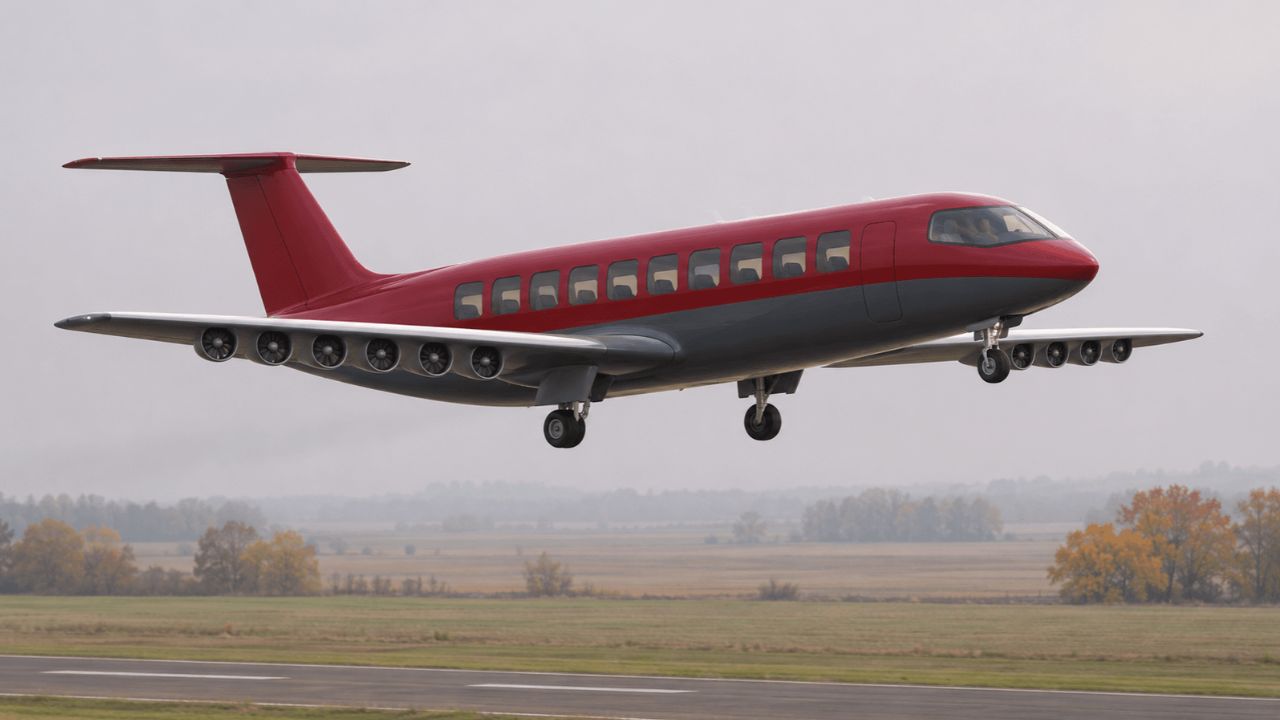
China’s CE-25A electric passenger aircraft has completed its first crewed flight in Shandong Province, marking a significant development in the country’s efforts to introduce electric-powered aircraft for short-distance commercial travel.
The 10-tonne-class aircraft, developed by the Commercial Aircraft Corporation of China (COMAC) and its partners, carried two pilots and a flight-test engineer during the test conducted on November 14, 2026, in Binzhou.
According to China’s aviation authorities, the aircraft remained airborne for 16 minutes and 38 seconds, covering approximately 60.4 kilometres. Its onboard systems operated normally, while the recorded performance indicators met expectations.
Designed to accommodate 19 passengers, the CE-25A is intended for short intercity routes. The successful flight represents an important stage in its development, although further testing and regulatory approval are required before commercial passenger operations can begin.
FCRF’s Chief AI Officer Certification Returns on November 14 to Prepare Future AI Leaders
Electric Aircraft Designed for 400-Km Regional Flights
The CE-25A has a maximum takeoff weight of approximately 10 tonnes and is designed to carry up to 19 passengers.
Its reported cruising speed is 300 kilometres per hour, while its cruising altitude is approximately 2,400 metres.
The aircraft has a stated range of around 400 kilometres, making it suitable for relatively short regional journeys rather than conventional long-distance commercial flights.
Unlike traditional passenger aircraft powered by jet or turboprop engines, the CE-25A uses electric propulsion.
Its design incorporates 10 electrically driven ducted fans distributed along the wings, providing the thrust required for flight.
The aircraft is intended to demonstrate how electric propulsion technology could be used in larger passenger aircraft, beyond smaller training planes and electric air taxis.
However, detailed information about its battery capacity, charging requirements and energy consumption has not been disclosed.
These factors will be important in determining the aircraft’s commercial viability, particularly because battery weight, energy density and operating range remain major challenges for electric aviation.
First Crewed Flight Follows 19 Unmanned Tests
The latest milestone follows a series of autonomous flight tests conducted earlier this year.
The CE-25A completed its first unmanned flight on February 2, 2026, beginning a programme to evaluate its flight characteristics and onboard systems without a crew.
Since then, the aircraft has completed 19 autonomous unmanned flight tests.
The November 14 flight marked the transition to crewed testing, allowing engineers to assess the aircraft’s performance with pilots and a flight-test engineer onboard.
During the test, the aircraft reportedly performed as expected, with its systems operating normally.
The programme involves cooperation between aerospace and research organisations, including COMAC, the China Academy of Launch Vehicle Technology and Shanghai Jiao Tong University.
The development reflects China’s efforts to advance electric aviation technology and explore its potential application in regional passenger transport.
The CE-25A’s successful crewed flight also provides additional performance data needed for the next stages of testing and certification.
Regulatory Approval Still Required Before Passenger Operations
China’s Civil Aviation Administration has accepted the CE-25A’s application for type certification, bringing the aircraft into the formal regulatory assessment process.
However, acceptance of the application does not mean the aircraft has received certification or permission to begin commercial flights.
Further evaluations will be required to assess the reliability of its electric propulsion system, battery safety, thermal management, electrical equipment and emergency procedures.
Regulators must also examine performance under different operating conditions before determining whether the aircraft meets applicable aviation safety requirements.
Beyond certification, the aircraft’s commercial prospects will depend on operating costs, charging infrastructure, maintenance requirements and the range it can achieve while carrying passengers.
The stated 400-kilometre range represents the aircraft’s reported design capability and should not be confused with the 60.4-kilometre distance covered during its first crewed test.
For COMAC and its development partners, the successful flight represents progress towards establishing electric propulsion as a practical option for regional aviation.
The CE-25A will now require continued testing and regulatory evaluation before it can move from experimental flights to commercial passenger service.
About the author — Suvedita Nath is a science student with a growing interest in cybercrime and digital safety. She writes on online activity, cyber threats, and technology-driven risks. Her work focuses on clarity, accuracy, and public awareness.