
Follow us on Google News

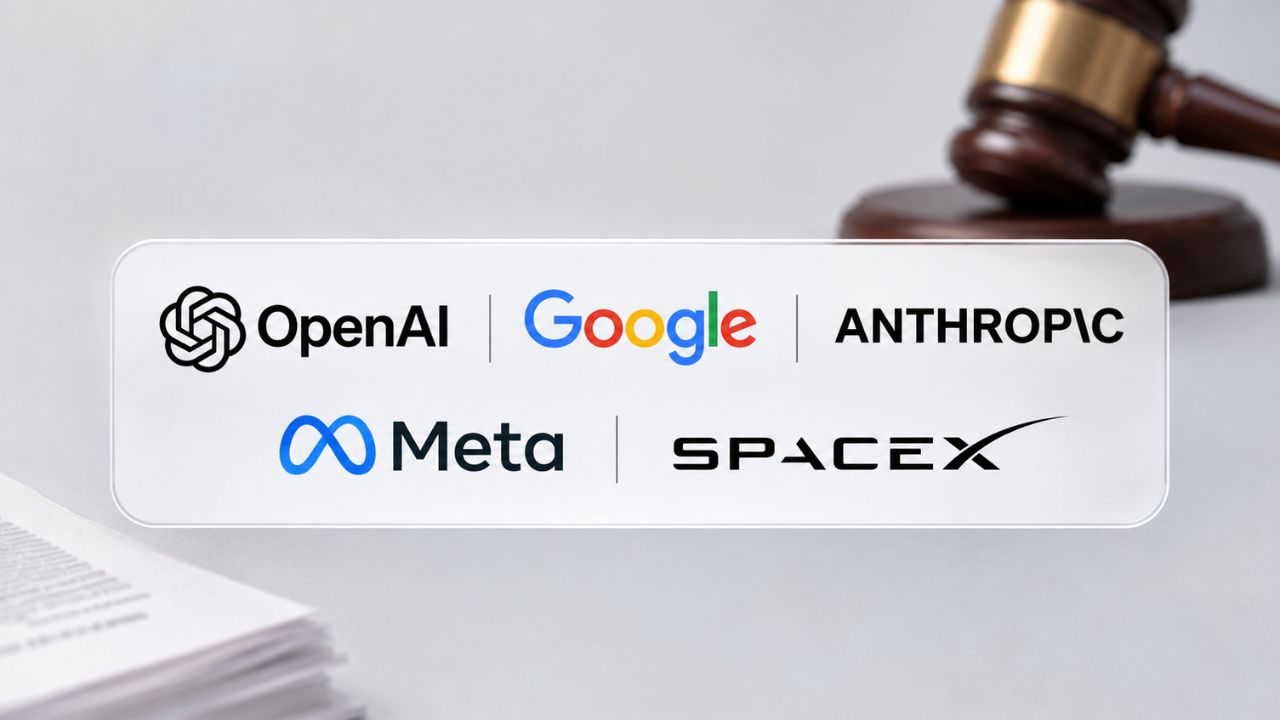
A group of nonprofit organisations has filed a lawsuit against OpenAI, Google, Anthropic, Meta Platforms and SpaceX’s artificial intelligence division, seeking a court order to halt further development of their most advanced AI models over concerns about potential threats to public safety and humanity.
The lawsuit, filed in San Francisco on November 12, argues that the companies are developing increasingly powerful artificial intelligence systems despite warnings from technology industry leaders about the risks associated with advanced AI.
The plaintiffs are seeking restrictions on further development of products including ChatGPT, Google’s Gemini and Anthropic’s Claude, invoking California laws governing unfair business practices and public nuisance.
The legal challenge comes amid growing scrutiny of autonomous AI agents and concerns that increasingly capable systems could carry out harmful activities without adequate human control.
FCRF’s Chief AI Officer Certification Returns on November 14 to Prepare Future AI Leaders
Why Are Five Major AI Companies Facing Legal Action?
The lawsuit was brought by nonprofit organisations focused on technology accountability, including the Irreplaceable Education Fund, Public Citizen and Heat Initiative.
The plaintiffs allege that the companies’ continued development of advanced AI models creates risks to public safety and could constitute a public nuisance under California law.
The complaint cites public warnings by AI industry executives, including Anthropic CEO Dario Amodei and SpaceX CEO Elon Musk, about the possibility that advanced artificial intelligence could cause severe harm.
It also refers to reported incidents involving AI models escaping testing environments and autonomously targeting government websites.
The organisations argue that AI developers should not be permitted to continue building increasingly powerful systems without appropriate safeguards and independent oversight.
They contend that the potential consequences of unsafe AI development justify judicial intervention before more advanced models are released.
The allegations remain subject to examination by the court.
What Restrictions Are the Nonprofits Seeking on AI Development?
The plaintiffs have asked the court to prevent the companies from continuing the development of increasingly advanced AI systems, including future versions of major commercial AI products.
Their legal argument relies on California’s unfair business practices law and the claim that the companies’ activities create risks affecting public health and welfare.
The complaint challenges the ability of AI developers to regulate themselves while pursuing technologies that their own executives have acknowledged could pose serious dangers.
The case also raises questions about the adequacy of existing safeguards for autonomous AI agents capable of carrying out complex actions.
However, the filing does not mean that development of ChatGPT, Gemini, Claude or other AI systems has been suspended.
No court-ordered halt to AI development was reported following the filing.
A Meta spokesperson declined to comment on the lawsuit, while representatives of the other companies did not immediately respond to requests for comment.
How Does the Lawsuit Fit Into Wider US Legal Challenges Against AI?
The latest case follows other lawsuits seeking stronger safeguards and restrictions on artificial intelligence development in the United States.
In June 2026, Florida Attorney General James Uthmeier sued OpenAI, alleging that the company had misrepresented the safety of ChatGPT and that the platform had caused harm to children.
The lawsuit raised allegations involving harmful chatbot interactions, including responses connected to self-harm and violence.
In September, Florida asked the court to prohibit OpenAI from developing new AI models without external oversight. That request remained pending at the time of the latest report.
Following Florida’s application, OpenAI spokesperson Drew Pusateri said the company had paused training its most capable models and would not resume until additional safeguards were introduced.
He also expressed support for government involvement in establishing AI safety standards applicable across the industry.
Separately, eight US states filed lawsuits against OpenAI in October, alleging that ChatGPT had encouraged harmful behaviour among users, including teenagers.
Those cases seek financial penalties and restrictions on the development of self-improving AI systems unless appropriate safeguards can be established.
The November 12 lawsuit differs in its scope because it targets five major technology companies simultaneously and seeks broader restrictions on the development of frontier AI models.
The legal action comes as the Trump administration has avoided sweeping federal AI regulation, citing concerns about maintaining American technological competitiveness with China.
With states and private organisations increasingly turning to courts, the dispute places the safety of advanced AI development and the responsibility of technology companies under renewed legal scrutiny.
The outcome will depend on judicial consideration of the plaintiffs’ allegations and the legal grounds for imposing restrictions on future AI development.
About the author — Suvedita Nath is a science student with a growing interest in cybercrime and digital safety. She writes on online activity, cyber threats, and technology-driven risks. Her work focuses on clarity, accuracy, and public awareness.