
Follow us on Google News

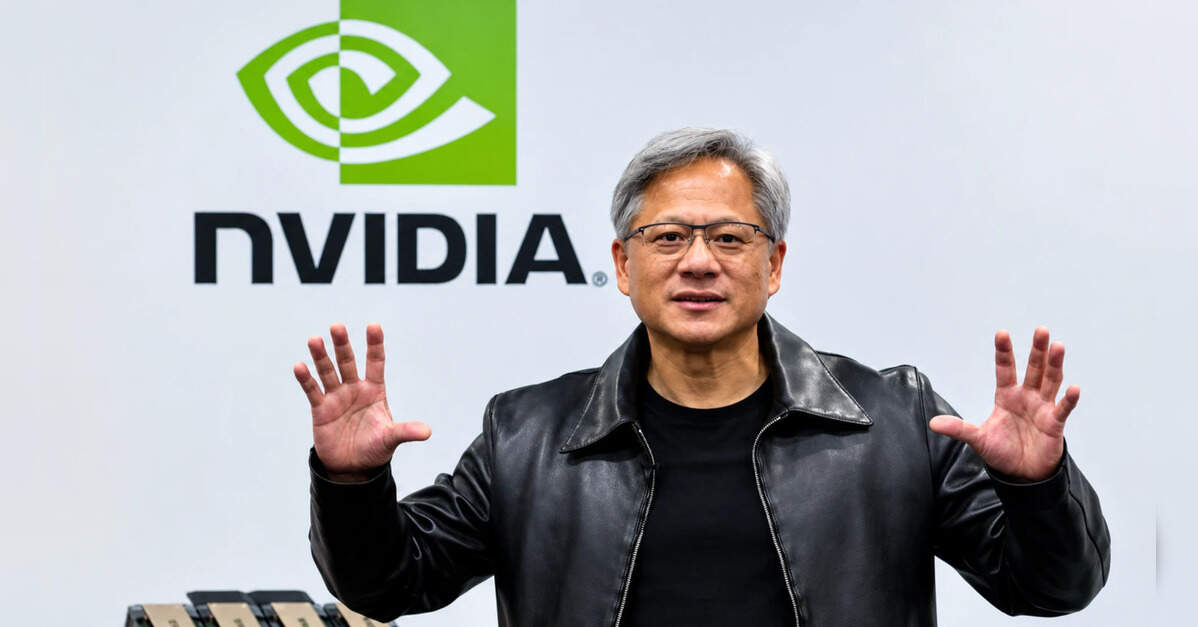
A personal controversy surrounding Nvidia co-founder and chief executive officer Jensen Huang has triggered a sharp market decline and raised corporate governance concerns across the semiconductor sector. Following Huang’s admission of marital infidelity and amid scrutiny over alleged links to Chinese intelligence, Nvidia lost approximately 380 billion dollars in market capitalization over two trading sessions. The sell-off wiped out nearly 32 lakh crore rupees in investor value, dislodging the firm from its standing as the world’s most valuable public company behind Apple and Microsoft. According to the Bloomberg Billionaires Index dated November 10, 2026, Huang’s personal fortune declined to 148 billion dollars, pushing him down to 12th place and outside the global top ten.
Severe Market Capitalization Erosion and Personal Financial Impact
The decline unfolded rapidly across global equity markets as trading opened under heavy selling pressure. Nvidia shares fell by 4.3 percent on Monday, erasing roughly 190 billion dollars in market value in a single day. The downward momentum carried into Tuesday with an additional contraction exceeding 160 billion dollars, bringing the cumulative two-day decline close to 380 billion dollars. With its total market valuation dipping below 4.31 trillion dollars, Nvidia lost the top spot to Apple on Monday before sliding behind Microsoft to the third position on Tuesday. Huang holds an equity stake of more than 3.5 percent in Nvidia, leaving his individual net worth directly exposed to shifts in the company’s stock price. In the event of a divorce settlement, estimates indicate he could be required to transfer close to 80 billion dollars to his spouse.
National Security Questions and Scrutiny Over Strategic AI Chips
The controversy originated from an internal memo sent to company personnel in which Huang admitted that he had not remained faithful to his wife. The situation intensified after reports identified the woman involved as Alice Huang, raising broader geopolitical questions. United States authorities have expressed suspicion regarding potential associations between the woman and Chinese intelligence networks. Records indicate that Alice Huang has had ties to a Singaporean enterprise that previously completed chip transactions with Nvidia totaling more than 4 billion dollars. The involvement of US intelligence agencies monitoring these transactions has drawn international regulatory attention to the company, given ongoing geopolitical frictions between the United States and China over leading-edge artificial intelligence hardware.
Corporate Governance Dilemma and Succession Uncertainties at the Helm
The crisis has brought Nvidia’s long-term leadership strategy under intense scrutiny by Wall Street analysts and industry observers. While the company’s 11-member board of directors has expressed continued confidence in the 63-year-old executive and declined to remove him from his position, analysts at Melius Research cited the lack of a clear succession roadmap as a major structural vulnerability. Huang has served as chief executive, chairman, and public face of Nvidia since co-founding the business in 1993, forging crucial relationships with international corporate partners and political leaders, including President Donald Trump. Nvidia has acknowledged succession planning as a recognized risk factor in its corporate financial filings. Although senior executives such as Chief Financial Officer Colette Kress, Chief Scientist Bill Dally, and Chief Technology Officer Michael Kagan lead an experienced bench of roughly 60 direct reports, analysts believe replicating Huang’s stature and global strategic influence remains an unresolved institutional challenge.