
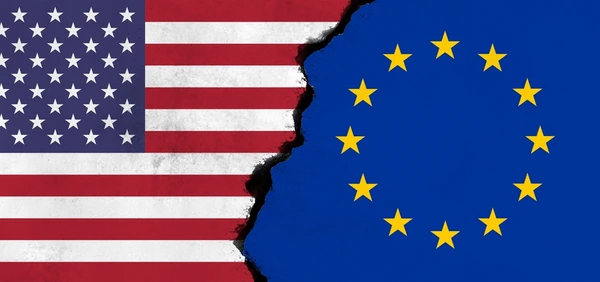
Europe is preparing for the possibility of a fresh trade confrontation with the United States following signals of potential tariff pressure from Washington. After raising objections to the US stance on Greenland, discussions within the European Union have intensified on how to respond if punitive trade measures are imposed.
While individual European countries may have limited leverage on their own, officials believe that a coordinated response at the EU level could significantly raise the economic and political cost for the United States. Diplomatic sources say the bloc is keen to ensure that any unilateral tariff action does not go unanswered.
According to European officials, the EU already has a detailed list of American goods—valued at more than $100 billion—on which retaliatory duties could be imposed if required. The existence of this list is intended to send a clear message that Europe is prepared to defend its economic interests.
Certified Cyber Crime Investigator Course Launched by Centre for Police Technology
What is the ‘bazooka’ and why it matters
Recent discussions have also focused on a rarely used legal and economic instrument informally referred to as the “bazooka.” This mechanism allows the EU to take far-reaching countermeasures against economic coercion by a third country, potentially covering trade, investment and services.
Although the tool has never been activated, its mere consideration reflects the seriousness with which European policymakers view the current situation. Member states, however, remain divided over the scope and timing of such action. Diplomats stress that there is still room for dialogue and de-escalation before any irreversible step is taken.
Toughest option: restricting military facilities
Among the most hardline options under discussion is the possibility of limiting or suspending the use of US military facilities located in Europe. Germany’s Ramstein Air Base is frequently cited in this context, given its strategic importance and the large number of US personnel stationed there.
Such a move would have serious implications for transatlantic security cooperation and could sharply escalate tensions. For this reason, European officials describe it as a measure of last resort, to be considered only if economic pressure intensifies significantly.
Focus on defence and Arctic strategy
Europe is also reviewing its broader security posture, particularly in the Arctic region, where strategic competition has been increasing. Strengthening presence around Greenland is being discussed alongside plans to accelerate defence spending and deepen cooperation among European militaries.
Reducing reliance on US-made weapons systems is another long-term objective, though officials acknowledge that Europe currently depends on American technology for several critical defence platforms. Expanding domestic defence manufacturing capacity remains a challenge that will take time to address.
Trade diversification gains momentum
To limit exposure to potential US trade actions, the EU is also pursuing a strategy of diversification. Recent progress has been made on trade agreements with four South American countries, and discussions with other global partners are gaining pace.
Officials indicate that a trade agreement with India could be announced in the near future, while exploratory talks with Australia and other economies are also on the table. The goal is to broaden export markets and supply chains so that any single country’s tariffs have a limited overall impact.
Unity tested by internal differences
Despite broad agreement on the need to remain prepared, differences persist among EU member states. Some favour a swift and firm response to any tariff move, while others argue for patience and continued diplomatic engagement.
Diplomatic sources say careful assessment of economic fallout, legal constraints and security implications is essential before any decisive action is taken. Maintaining internal unity is seen as critical to ensuring the effectiveness of any response.
What lies ahead
Further high-level meetings are expected at the EU level in the coming weeks to refine counter-tariff options, define the conditions under which the “bazooka” could be deployed, and set timelines for expanding global partnerships.
For now, Europe appears determined to keep all options open—preserving space for negotiation while ensuring it has the tools ready to respond forcefully if pressure from Washington intensifies.
About the author – Ayesha Aayat is a law student and contributor covering cybercrime, online frauds, and digital safety concerns. Her writing aims to raise awareness about evolving cyber threats and legal responses.
